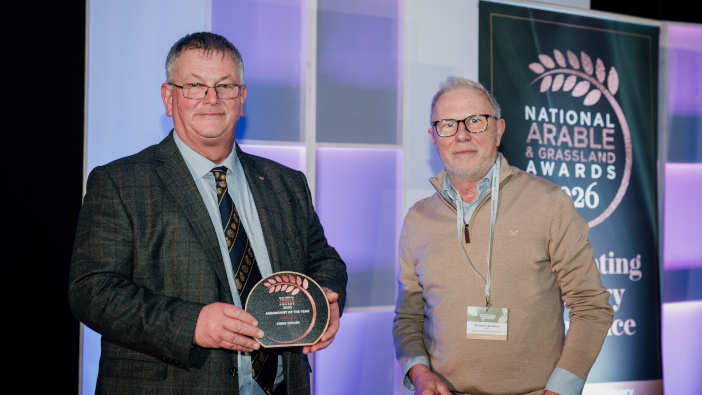
It was a Nuffield Farming Scholarship that prompted Chris into independent agronomy.
As well as giving him the motivation to form an independent business, it also helped shape it, reinforcing his belief in a more holistic approach to farming. Now he works with 26 farmers and landowners in the West, with a focus on regenerative farming, helping them achieve sustainability and move towards net zero.
As a management trainee for two large Co-Operative farms, it gave Chris a good grounding in running large estates. He now manages a range of crops, including forage crops such as maize and fodder beet, grazable cover crops and grassland.
Speak to Chris about sustainability and you quickly realise it isn’t just about weather resilience and reducing the farm footprint, it’s also a financial issue. Any farm has to remain productive and profitable if it is going to be viable in the future.
One reason he has utilised various agronomy technologies, such as the Yara N-Tester and UAV (Unmanned Aerial Vehicle) with software from Skippy Scout.
The investment not only allows him to offer the same level of service as larger agronomy firms but also optimise crop performance for his customers.
Weeds have been mapped, underperforming areas identified, variable rate seed and fertiliser plans produced and compaction from farm traffic issues highlighted, all recorded in reports, so a visual log of where problems have occurred can be tracked and remedied.
This attention to detail and report generation has helped build confidence with his clients. A significant gain has been in the reduction of nitrogen, in some cases up to 30%. The N-Tester has been used for several years to complement SMN Plus tests (previously CF N-Min tests) with the use of organic manures.
Taking the guesswork out of feeding the crop has produced savings but also maintained yield (in some cases, enhancing it) through a healthier plant, reducing the risk of crop lodging and easing disease pressures.
Tracking and reporting have also given customers the confidence to move to reduced cultivation practices or no-till, generating further savings in fuel and labour requirements, and helping to maintain working windows in the face of extreme weather events.
The benefits of a more resilient system have been seen by some customers quickly, providing a buffer following recent droughts, and savings in inputs and the better use of resources have helped them offset low grain prices.
So, they can keep their eyes on their finances, he also undertakes crop and whole farm budgets for customers, the feedback being that these are in line with industry standards. It helps them better understand their cashflow and gross margins contributions over a cropping season.
What particularly impressed the judges was Chris’s desire to better himself. As well as his ‘Do regenerative farming practices pave the way for UK agriculture to meet net zero?’ Nuffield Scholarship, he has achieved the BASIS Graduate Diploma in agronomy with environmental science, following several years of postgraduate courses on nutrient and conservation management.
He is also a member of BASIS environmental advisors. Recently, he became a professional member of the British Society of Soil Science (BSSS) and a professional member of the Institute of Agricultural Management (IAgrM). He hopes to complete a post graduate masters degree at Aberystwyth University as a follow-up to his Nuffield Farming Scholarship.
Chris is also part of several Innovate UK projects running in the UK, evaluating innovative technology and practices, to help farm businesses and the industry find suitable solutions.
As he points out, although these projects are often academic in nature, engaging with these projects helps keep him and his customers at the forefront of addressing ongoing challenges and those in the future.
This work is complemented by consultancy projects he undertakes. He is working with several dairy farms to look at improving the water holding capacity of soils, leading to better nutrient uptake, reduced run-off and erosion.