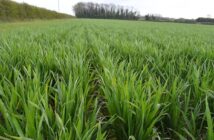

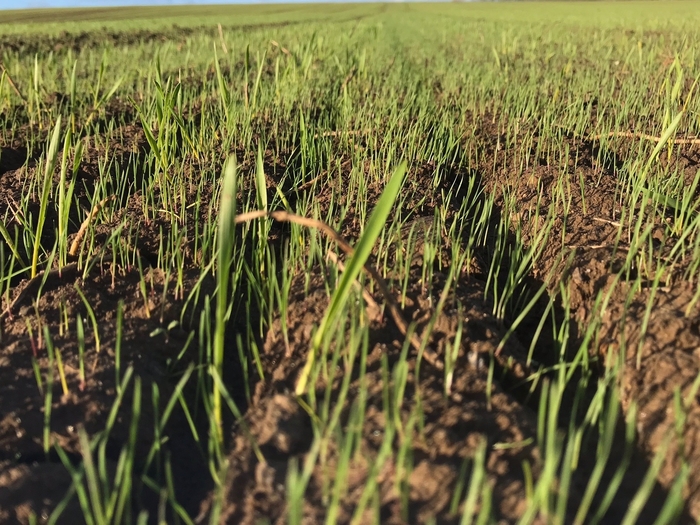
Following generally strong autumn weed control, growers must now decide how best to manage surviving and spring- emerging grassweeds and make the appropriate control choices.
Hutchinsons technical manager Dick Neale says Autumn residual herbicides have performed well overall. In the main, weaker results have largely been limited to early-drilled crops or where dry conditions restricted activation.
“In many dry situations, lower-cost products were used initially, followed by more robust residual options once rainfall arrived,” he explains. “That strategy, combined with wider use of mixtures containing cynmethylin, bixlozone, aclonifen, metribuzin, flufenacet and diflufenican, has driven improved control.”
Sequencing has also played a key role. Follow-up residual applications, applied when conditions allowed, significantly strengthened overall performance. Gradual wetting and mild weather supported active weed growth, aiding uptake without excessive leaching.
Cultural control has further reduced blackgrass pressure, he points out. “Even where drilling dates were stretched, lower background populations meant residual chemistry faced less pressure. In many cases, seed return in 2025 was minimal – something to bear in mind if pressure rises again in 2026,” he adds.
Spring choices
Choosing between spring residuals and contact ALS herbicides depends on weed species, growth stage and expected spring emergence, suggests Hutchinsons technical manager, Dick Neale.
Autumn residual herbicides have performed well overall. In the main, weaker results have largely been limited to early-drilled crops or where dry conditions restricted activation.
“In many dry situations, lower-cost products were used initially, followed by more robust residual options once rainfall arrived,” he explains. “That strategy, combined with wider use of mixtures containing cynmethylin, bixlozone, aclonifen, metribuzin, flufenacet and diflufenican, has driven improved control.”
Sequencing has also played a key role. Follow-up residual applications, applied when conditions allowed, significantly strengthened overall performance. Gradual wetting and mild weather supported active weed growth, aiding uptake without excessive leaching.
Looking ahead, pendimethalin remains the main spring residual option he feels. “It controls spring-emerging blackgrass, ryegrass, wild oats and bromes, as well as broadleaved weeds. It is the only residual available up to GS30 in winter cereals (aside from limited stocks of Lantern).
“However, established grassweeds will not be controlled effectively by residual chemistry.
ALS products remain highly effective on bromes and wild oats when applied before stem extension. Control of established blackgrass and ryegrass will be poor, and early applications may miss later-emerging weeds.”
Adjuvants, water and application
He says results of recent trials underline the importance of adjuvant choice. “Increasing Phase II (95% MSO oil) from 0.5% to 1% with Broadway Star or Ultra improved brome control by up to 20%.
Ryegrass responses differ though. “Adding Phase II alongside Biopower or Probe reduced control from mesosulfuron + iodosulfuron products, whereas including 0.5% Validate improved ryegrass control by up to 30%. For these mixtures, Biopower or Probe must be included as per label, with Validate used additionally where appropriate.”
He notes, leaf drying within three to four hours is essential for contact products. “With crops and weeds continuing to grow, applications should be made promptly when conditions allow.
“Water quality is also critical. ALS graminicides respond well to conditioning, and most water supplies will benefit from treatment.”
Finally, nozzle choice must not be overlooked, he says. “Most labels specify a medium spray quality; very coarse 3-star LERAP nozzles will compromise whole-field performance. Correct setup remains key to consistent, reliable weed control this spring.”