
The Government plans to introduce a carbon border adjustment mechanism (CBAM) in January 2027 could impact farmers’ ability to produce food, the NFU says
Materials currently expected to fall under the scope of the CBAM when imported to the UK include aluminium, cement, hydrogen, steel products, and – crucially for agriculture – fertiliser.
The NFU has previously expressed concerns that the CBAM will push up the cost of fertiliser for farmers, particularly for the arable sector. “Without that pause, CBAM risks having a material impact on growers’ and farmers’ ability to produce food at a time when we must grow domestic food production,” says NFU Deputy President Paul Tompkins.
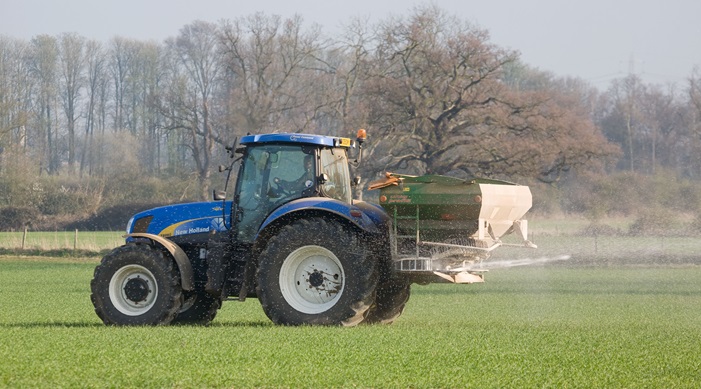
“British farmers largely rely on fertiliser to grow and produce our food, yet we no longer make it here. Adding a CBAM to this essential input as it arrives at our ports would pile even more costs onto farms already under intense pressure.”
The NFU worries that if the government fails to apply the same charges to imported food, it will simply be penalising British farmers while giving overseas producers a free pass.
Lower fertiliser costs in non-CBAM countries give overseas producers a built-in price advantage, making it easier for imports to undercut UK farmers. That imbalance risks shifting production abroad and driving carbon leakage, ultimately weakening the competitiveness of UK agriculture.
Supply disruption
The war in the Middle East and subsequent blockade of the Strait of Hormuz have seen disruption to supplies of oil and gas.
One fifth of global ammonia and urea supplies and 20% of the world’s oil and gas shipments pass through this channel. Natural gas is used in the production of nitrogen fertilisers, accounting for between 60-80% of the input costs associated with its production.
“Every extra cost on fertiliser runs the risk of feeding through the food chain, increasing the cost of producing food and adding to inflation for consumers,” Paul adds. “Natural gas remains the dominant input cost in nitrogen fertiliser production and disruption linked to the Iran conflict is already driving up costs for UK farmers. Many are facing rising fuel and fertiliser bills with little certainty.
“We believe the best option would be to postpone CBAM and conduct a market review in 12 months. Without that pause, CBAM risks having a material impact on growers’ and farmers’ ability to produce food at a time when we must grow domestic food production.”