
What makes a variety a farm favourite? Most farmers would say that it is consistent performance across different situations and seasons. Over the years, several varieties, such as Clare, JB Diego, and Graham, have fallen into this category.
But eventually, time catches up with every variety, and farmers look for their next banker. Even in just its first year of major release, RGT Hexton is already catching the eye of farmers looking for a variety that performs across different situations and seasons.
David Suckling farms near Kings Lynn in Norfolk. He had been growing Graham for a number of years, but felt that its yield was being outdone by newer varieties. A visit to Agrii’s variety trials at Stow Longa, and a discussion with their technical manager for seed, John Miles, led him to try 10 ha of RGT Hexton this year.
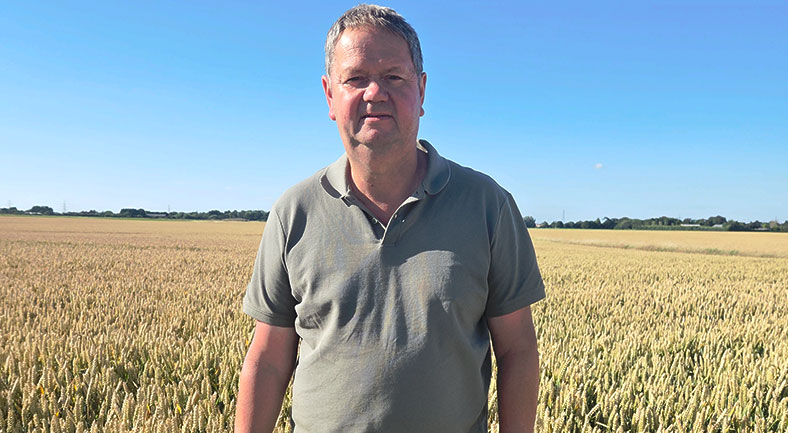
“I think certain varieties suit certain types of land,” says David. “When you get onto a good variety, then it is worth sticking with it. We grew Graham for years and got on very well with it, but I felt it was getting a bit outclassed, and that’s when we needed to move on to something with a better yield.”
“My agronomist, Miles Doncaster, agreed with John Miles that Hexton would be worth trying, which is why I ordered enough to have a go last summer.”
Yellow rust pressure has been high this year for David, but he has not had any issues with Hexton, he says. In fact, he has been able to save some money on fungicides compared to the other varieties he grows.
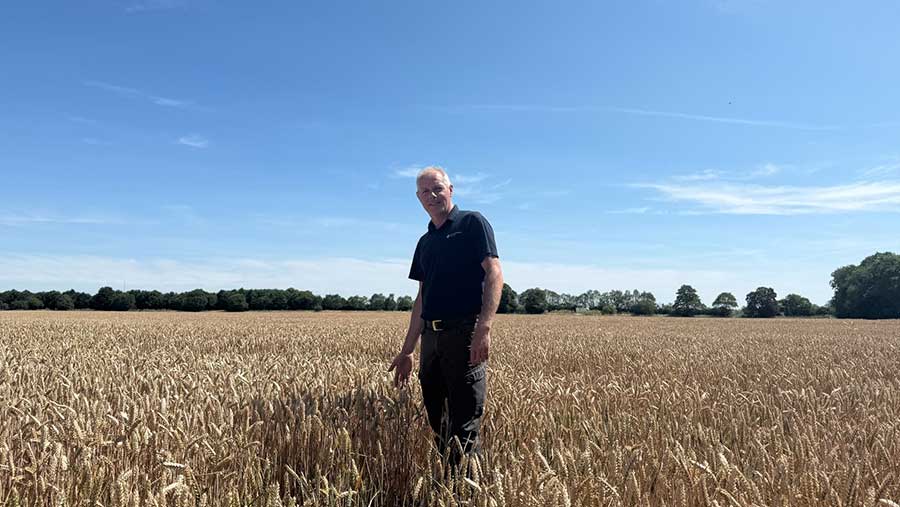
Hosting Frontier variety trials on Shuttleworth College’s 500-acre farm gives Shane Durham, head of farming and resources, the chance to see how new varieties perform under his conditions. Last summer, he was looking for an eventual replacement for his existing varieties Tapestry and Skyscraper. He is growing a field of Hexton this year and is pleased with how it is looking going into harvest.
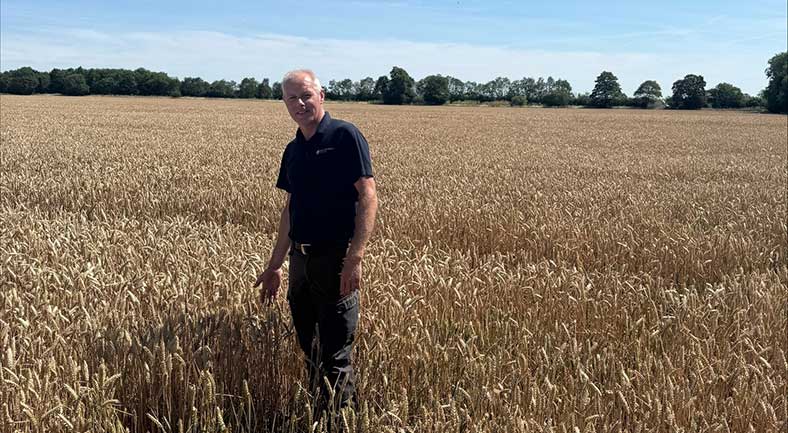
“As a working commercial farm and learning environment, Shuttleworth Colleges’ Kingshill Farm offers a unique setting where students can see first-hand how crop performance is assessed, analysed and applied in real-world farming decisions,” says Shane. “We are proud to support agricultural crop trials to help our students and local farmers evaluate the latest crop varieties under local growing conditions
“It gives us an opportunity to see which do well. Hexton was one of those that caught our eye.”
The farm’s silty soils are prone to slumping during wet winters and capping if the land gets heavy rain just after drilling, which makes establishment challenging. Because of this, Shane says they tend to drill early to get the crop away before capping and slumping become issues.
“We like that we can get Hexton in relatively early, and it gets away nicely before the winter.
“The Hexton has remained clean from disease all season, whereas we have had a lot of problems with rust with our other varieties this year. Although the Hexton has been grown some distance away from our Skyscraper and Tapestry,” adds Shane.
“Where they have sown Hexton, we are seeing farmers play to its strengths,” says Andrew Creasy, arable technical manager for RAGT. “It’s a great early sown wheat with steady autumn growth and decent yellow rust resistance, and it also performs well as a second wheat”
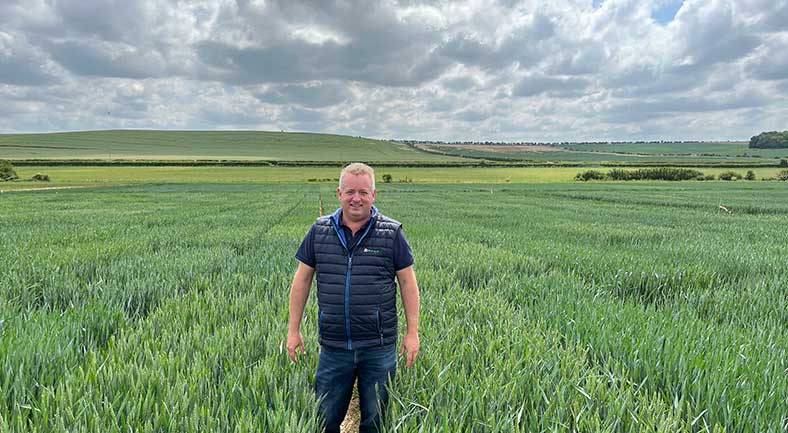
Farmer’s favourite varieties earned their reputation, not by having headline grabbing yields on the RL, but by being robust varieties that yield consistently, and that is what Andrew believes is crucial to Hexton’s broad appeal.
“We have seen Hexton’s yellow rust resistance stand up well under this season’s high pressure.
“Hexton has diverse yellow rust resistance that builds as the season progresses. We haven’t heard of any issues struggling to manage the disease on Hexton this season, which is a really useful management consideration given the proportion of varieties susceptible to yellow rust being grown on farm at the moment,” he notes.