

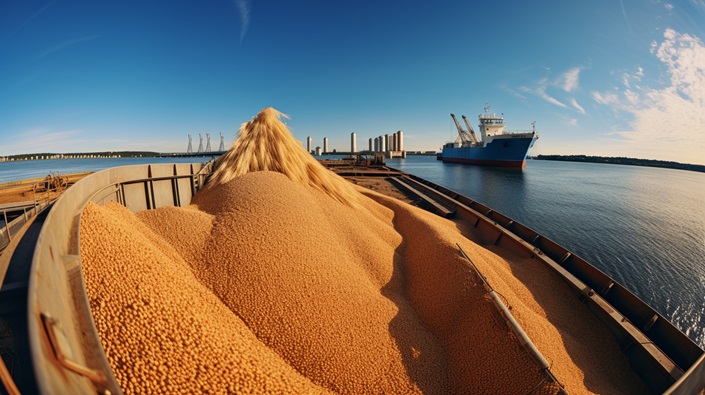
Grain markets have held on to recent gains with no end to the volatility of recent weeks. Nov-26 UK feed wheat futures remain close to £200.00/t as we move into August.
The AHDB says the Black Sea continues to be the key source of uncertainty and volatility for global grain markets. Further attacks on shipping and grain infrastructure reinforced concerns over potential disruption to exports from the region.
The weather also continues to influence markets. Late last week, the European Commission lowered its 2026/27 EU grain production forecasts, reflecting a tighter supply outlook. Soft wheat production is now estimated at 124.4 Mt, down from 126.3 Mt last month and 8% below the previous season. As a result, soft wheat exports have been reduced to 29.0 Mt, while end-season stocks are expected to fall to 12.9 Mt.
The sharpest revision was for maize, with EU production cut to 51.9 Mt from 59.9 Mt in June, driven by lower plantings and challenging growing conditions. This has increased the EU’s projected maize import requirement by 5.0 Mt to 24.0 Mt. Barley production was also revised lower, now forecast at 51.1 Mt.
Oilseeds outlook
Improving crop prospects pushed oilseeds a little lower, Paris Nov 26 oilseed futures slipping to just short of €523.50/t. The oilseeds complex was also pressured by expectations of increased OPEC+ production and concerns over weaker global demand, which pushed Nearby Brent crude lower.
One of the main drivers was forecasts for beneficial rainfall across the US Midwest, which improved soyabean prospects. The expected rain is particularly important as the crop enters the pod-setting stage, a key period for determining yield potential. According to the USDA, currently, 63% of US soyabeans are in good to excellent condition.
Favourable weather conditions across the Canadian Prairies continue to support canola yield potential. Warm temperatures, without excessive heat, have helped later-seeded crops catch up in development, allowing flowering and pod fill to progress with limited risk of significant yield losses. Looking ahead over the next week, temperatures remain fair over the Prairies, which will continue to aid crop development.
The European Commission also reduced its forecast for EU sunflower seed production in 2026/27. Output is now projected at 9.5 Mt, down from 10.1 Mt estimated last month, although this would still represent an improvement on the 8.7 Mt harvested in 2025/26. The downward revision points to some deterioration in crop prospects since the Commission’s previous outlook, but overall sunflower seed production is still expected to recover year-on-year.
AHDB analysts say crude oil markets will remain a key driver for oilseed prices, particularly through their influence on vegetable oil and biofuel demand. However, with favourable crop conditions in North America and expectations for ample global oilseed supplies, markets are expected to balance with improving demand prospects against a broadly comfortable supply outlook.