

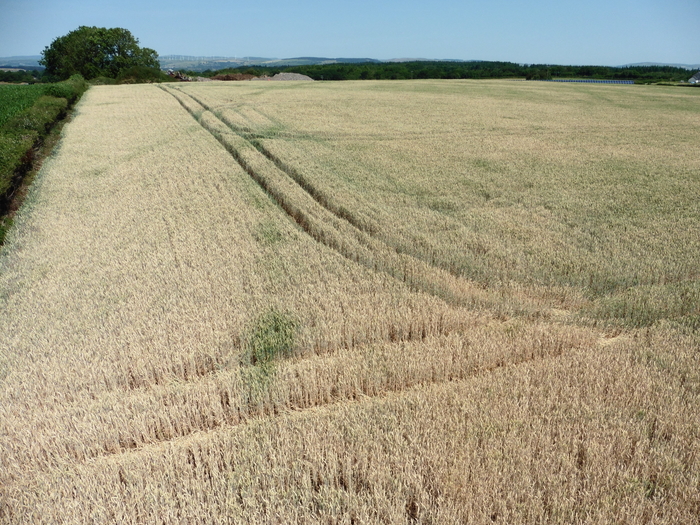
Over the last three seasons, climate volatility has knocked up to 15% off winter wheat yield across southern England, the Midlands and Wales.
That’s the finding from Strutt & Parker analysis of data from Defra’s Cereal and Oilseed Rape Production Survey, based on the results of about 1,500 farms. Strutt & Parker have compared average yields from the 2024 to 2026 harvests with an average from the preceding decade (2014 to 2023 harvests) to assess the underlying trend in crop performance by region.
Wheat yields have dropped by an average of 13-15% across the regions and by a smaller amount across most of northern England. The only regions where they increased were the North West & Mersey and Scotland.
Natalie Gaibani, head of farming at Strutt & Parker, says: “Yields can be expected to fluctuate from one harvest to another, but looking at the picture over three years really helps to highlight the broader trends. The analysis is a useful starting point in terms of assessing the impact of increasing heat extremes and volatile weather on cereals performance, with implications for farmers, processors, manufacturers and retailers.
“The changes are significant as even small changes in yields can drastically affect a farm’s profit. Not every farm will have been affected to the same extent – by the nature of averages, some farmers have been less affected and others more. Everyone in the supply chain needs to factor increasing weather risks into their business plans and budgets and start preparing to adapt. For farmers, this might include looking at hardier varieties, increased investment in soil resilience and water availability, or it could involve a more wholesale review of farm strategy.”
By comparing multi-year average yields, the analysis seeks to smooth out the impact of individual good or bad harvests.
Arable farmers in the southern two-thirds of the country felt the effects of an exceptionally wet autumn and winter that disrupted drilling ahead of the 2024 harvest. This was followed by a spring drought and high temperatures in 2025 and then the long summer drought of 2026.
The data indicates that wheat – the most significant of the UK’s cereal crops – has seen the biggest reduction in terms of yields over the past three years.
In the South East of England, South West and West Midlands, yields have dropped by 15% compared to the historic benchmark, with yields down 14% in the Eastern region and 13% in the East Midlands and Wales.
Winter barley appears to be slightly less affected, although yields have still reduced. There is a much smaller north-south divide, with yields in most regions being 7-9% lower than they have historically. Only in Scotland have average barley yields increased (6%).
Oilseed rape is the least affected of the main crops, with the three-year averages remaining close to the 10-year historical averages.