
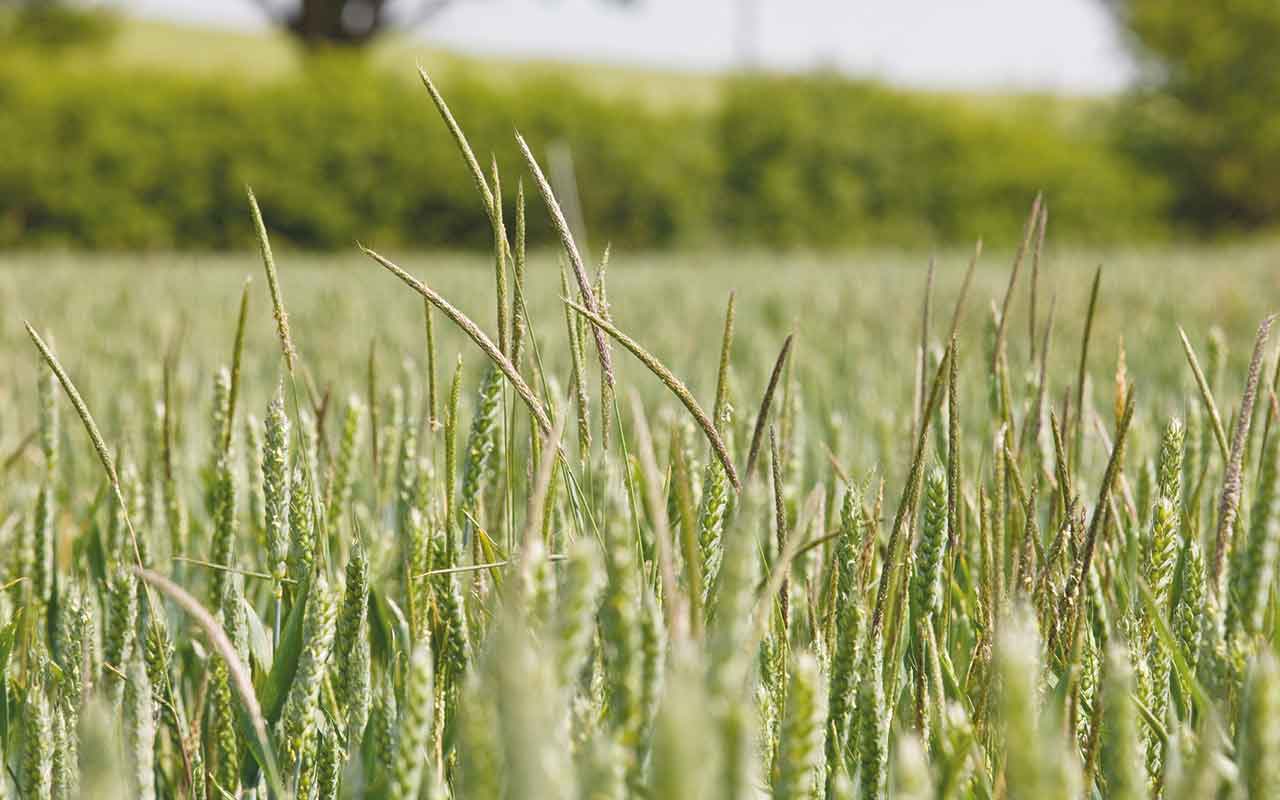
Rothamsted Research has partnered with Bosch, Chafer Machinery and BASF via its Xarvio platform to share specialist knowledge to help develop an innovative new approach to blackgrass control.
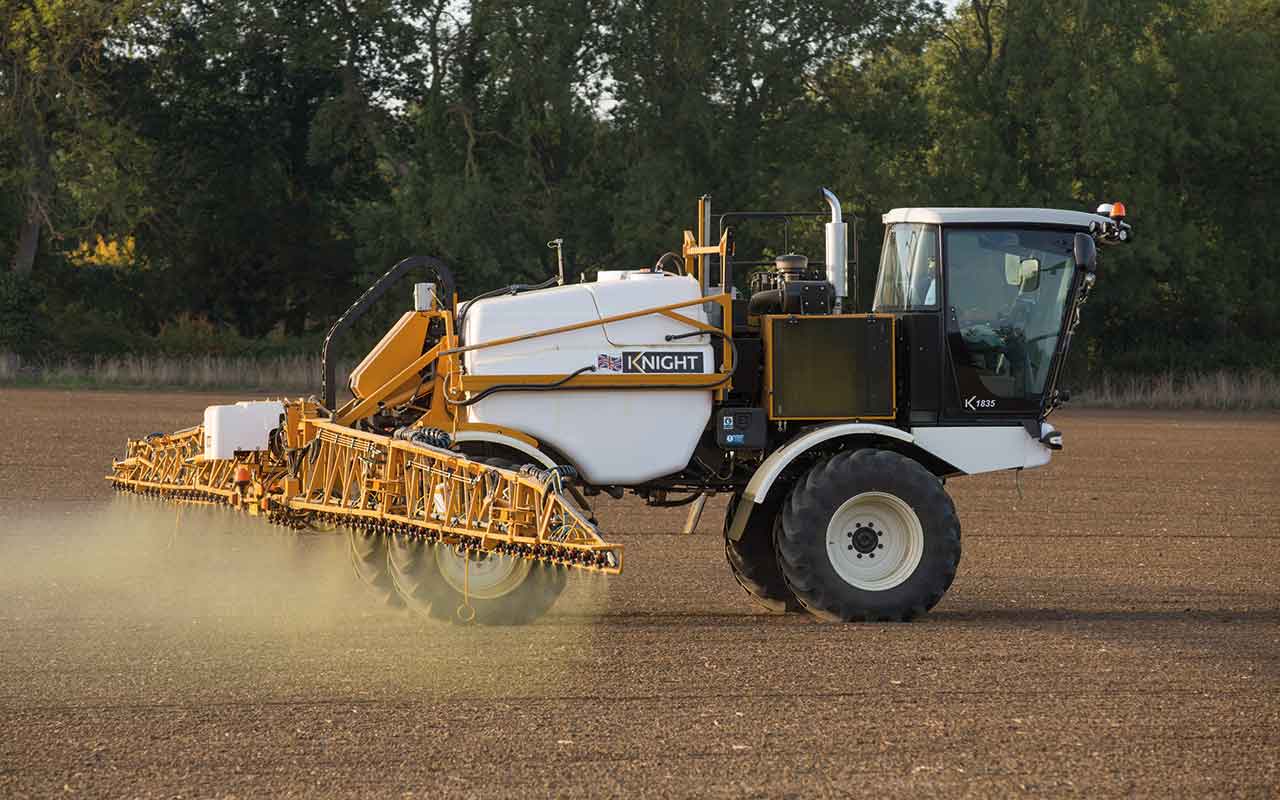
Using artificial intelligence (AI), cameras on a spray boom can detect blackgrass at a range of growth stages. The system then ensures the correct amount of herbicide is sprayed onto that area of the field.
The new approach should both reduce costs by spraying smaller areas of a field, and lower result blackgrass prevalence.
Rothamsted Research helped train the Bosch cameras to spot weeds by photographing both the crop and weed plants from a fixed height, over a range of plant developmental stages.
Training the system
An AI algorithm was then trained to apply this knowledge to images that came from cameras being driven over real fields across a whole farm.
The camera doesn’t request the sprayer to target a particular plant. Instead, it asks the sprayer to target an area where it can see blackgrass is growing, so the technique is, in effect, map-based rather than targeting individual plants.
Experiments with a Chafer Machinery sprayer using different numbers of cameras and boom heights resulted in a working setup of 28 cameras at a height of 1.1m.
Each partner contributed to the final application according to their own relevant expertise. Xarvio undertook the agronomics, exploring which chemicals to use, Chafer adapted its machinery and Bosch led the technological implementation.
This approach allowed the partners to pool the knowledge each has acquired over many years of studying the blackgrass problem and combine it with state-of-the-art technology.
To help Bosch develop the system, Rothamsted outlined the types of cultivation systems farmers employ and the non-chemical methods that farmers use to manage blackgrass
Rothamsted evolutionary ecologist Dr David Comont says: “Blackgrass is a particularly troublesome weed, and growers have had to resort to increasingly complex and expensive mixes of herbicides to control it. The strength of this approach is that by targeting herbicides only where they are needed, it can both reduce the amount of herbicide being used and the cost to the grower, while still maintaining control of this weed.”
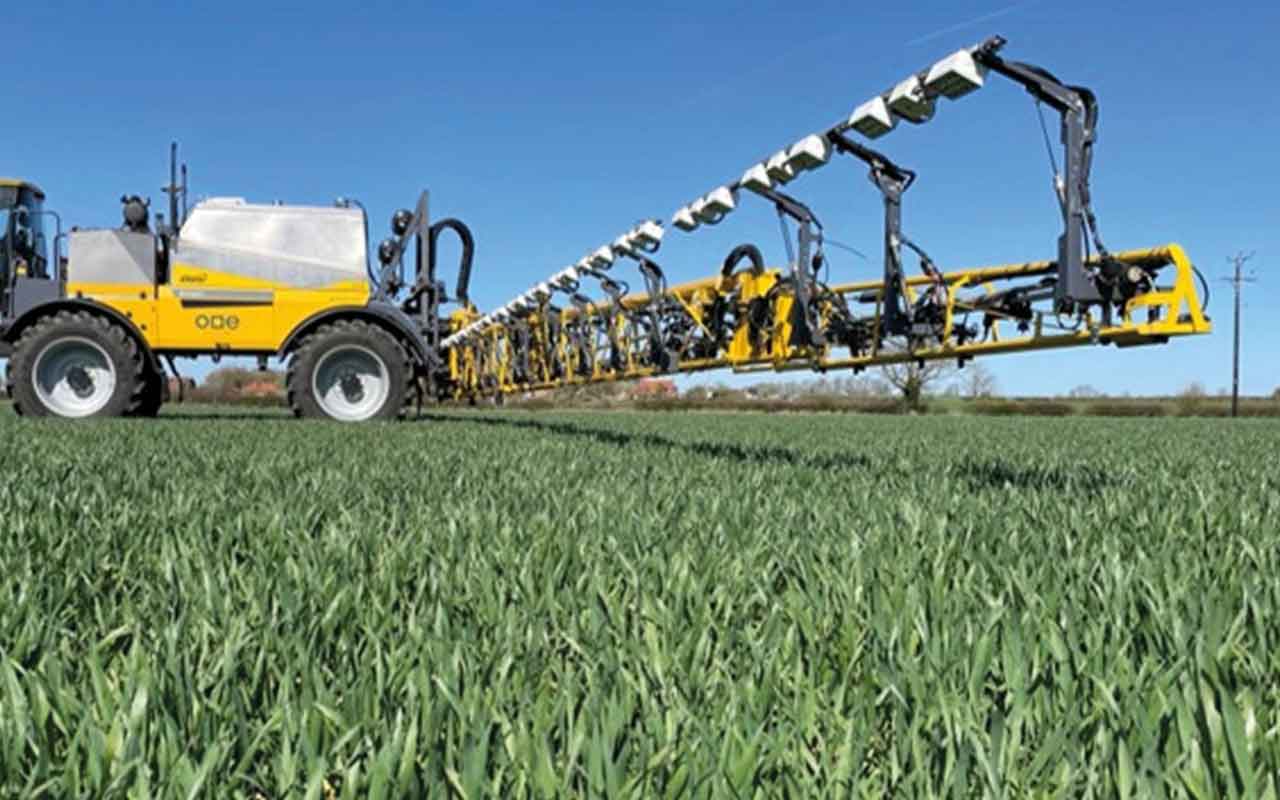
The sprayer is equipped with 28 cameras © Chafer
State-of-the-art solution
“This project allowed Rothamsted to bring the knowledge our researchers have acquired over many years of studying the blackgrass problem, and combine it with Bosch’s state-of-the-art technology and the specialist knowledge of the other partners, to make significant progress towards this precision-spraying solution,” David says.
Rothamsted helped to train the weed-detection algorithms by working directly with the images captured by Chafer. Over many hours, Rothamsted’s field team painstakingly annotated almost 5,000 images taken in the field, marking up over 12,000 blackgrass plants and 10,000 other weeds. The team then helped validate the results by mapping blackgrass across the whole farm scanned by the Chafer sprayer, repeatedly mapping the blackgrass infestation across more than 100ha over three years.
One of the more challenging aspects of the project was training the AI. Muhammad Kassem, an AI expert at Bosch, explains: “Overall, we scanned about 5,000 images, covering a variety of different seasons and where blackgrass is growing among different crops – not only wheat, but also barley.
“Each time the sprayer completed a pass across the field it generated such a high volume of images that it took a couple of days to download them all. Then we used coding to clean up the images, another code to convert them to the right file format and a final code to train the AI algorithm. It was a fantastic project and we’ve come out of it with good accuracy, and that’s the key measure.”
The project was funded through Defra’s Farming Innovation Programme and the UKRI Transforming Food Production challenge.
Study reveals differing actions
of Group 15 herbicides
Scientists at Rothamsted Research have discovered that three widely used pre-em herbicides – flufenacet, EPTC and tri-allate – affect blackgrass in strikingly different ways.
The findings, published in Frontiers in Agronomy, shed light on the complex biochemical mechanisms behind herbicide action in one of the UK’s most persistent agricultural weeds.
Blackgrass has evolved resistance to multiple herbicide groups, making effective control increasingly challenging. Group 15 herbicides, described as those that affect shoot growth by inhibiting very long-chain fatty acid synthesis, are a cornerstone of weed control strategies.
However, there were always questions on whether this generic label was appropriate, as until now, little was known about how these herbicides affect blackgrass at the physiological or molecular level.
Using controlled growth experiments and advanced lipid profiling, the team found that:
- Flufenacet strongly inhibited both shoot and root growth and reduced wax and very long chain fatty acid content, particularly in sensitive biotypes
- Tri-allate caused dramatic reductions in polyunsaturated fatty acids in shoots, suggesting a unique mode of action beyond wax synthesis
- EPTC had milder effects, altering wax composition more than fatty acid profiles.
The research showed distinct biochemical effects of Group 15 pre-emergent herbicides
© Tim Scrivener
Differing actions
“Looking at physiology or metabolism, it is clear these herbicides don’t all work the same way,” says Dr Dana MacGregor, lead author and research scientist at Rothamsted. “Although these three herbicides are grouped together, their effects on plant growth and metabolism are different. Understanding these differences is not only scientifically interesting, but it also helps farmers and agronomists choose the right product for the right situation.”
Co-author Frédéric Beaudoin, a lipid metabolism specialist at Rothamsted, adds: “Fatty acid and lipid metabolic pathways are complex and interconnected with other metabolic processes. Blackgrass’ wax profile is unusual compared to most other grasses.
“By studying how these herbicides influence it, we not only learn about their activity, but also gain fundamental insights into their molecular targets and mode of action, which we now believe to be more complicated than initially thought.”
Gowan Crop Protection was a partner in the project. Global herbicide asset manager Laurent Cornette says these findings strengthen the confidence farmers and agronomists can have in combining different Group 15 pre-emergence herbicides.
“Group 15 encompasses a broad range of compounds that share the same physiological effect, but differ in their modes and sites of action.
“Notably, no cases of target-site resistance have ever been reported for Group 15 herbicides, giving them a distinctive status as low-risk resistance compounds. Their use can, therefore, contribute to preserving the efficacy of other herbicide groups by helping to delay resistance development.”
Blackgrass biotypes study
The study also compared two blackgrass biotypes: one herbicide-sensitive and one with metabolic resistance. Responses varied significantly between them.
“There’s no evidence of resistance to Group 15 herbicides in blackgrass, but populations from different fields can behave very differently,” explains Dr Hannah Blyth, lead author on the paper. “Studying these differences gives us insight into how physiological, genetic or metabolic traits shape herbicide responses and helps us design better strategies for sustainable weed control.
“Blackgrass pressure threatens the sustainability of UK cereal production. By revealing how Group 15 herbicides act differently, this work supports more targeted and effective use of pre-emergent herbicides in integrated weed management.”