

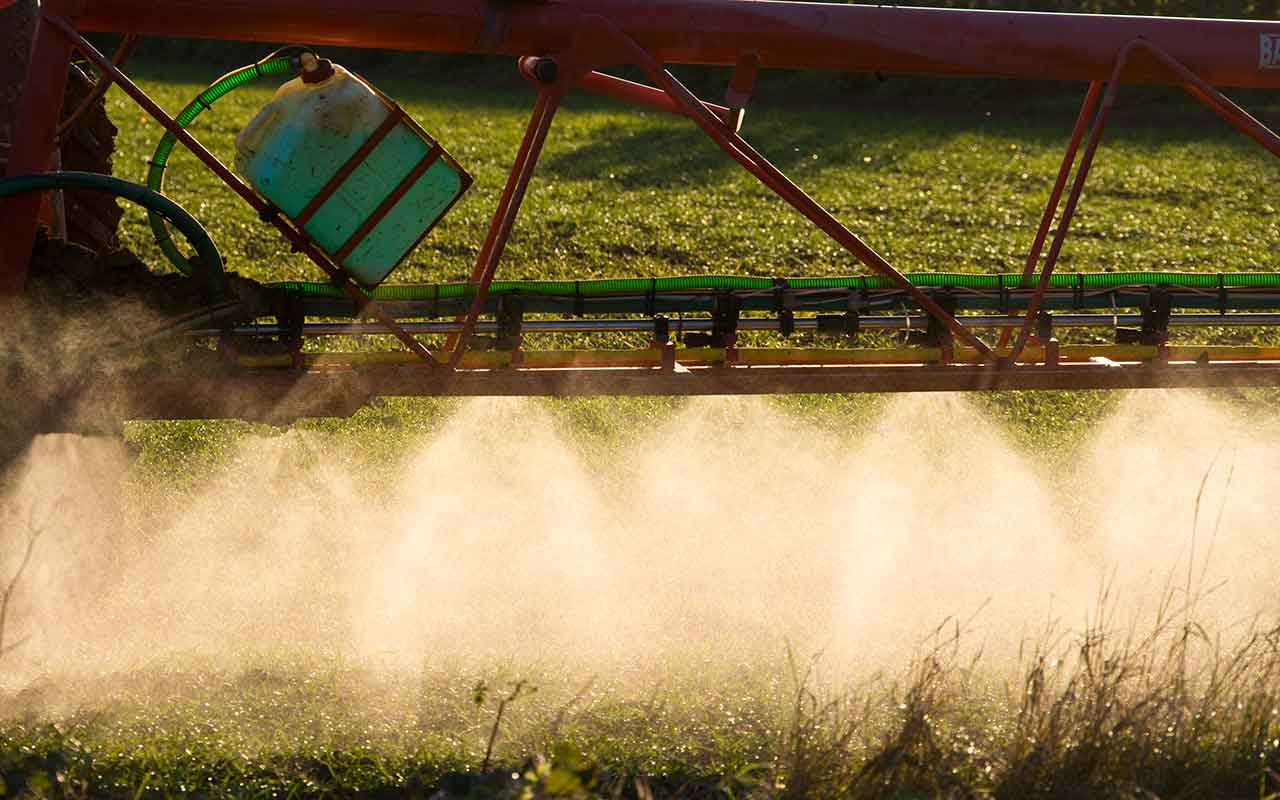
In the arms race that is the battle against blackgrass, we might have to think a bit deeper to manage the troublesome weed.
It has proved to be highly adaptable to farming systems. At Hutchinsons’ Cambourne blackgrass demonstration day in June, researcher John Cussans noted that blackgrass is now germinating for longer and although control strategies have reduced numbers, those that survive are bigger. A seedling plant density that delivered four heads/sq m in 1990 is likely to deliver nearer 10 now.
When talking to Rothamsted researcher Dr Dana MacGregor, you realise just how adaptable blackgrass is. It can survive more than 30 days of saturation, which is down to its genetic brilliance.
All plants can adapt to waterlogged conditions. The trouble with wheat is that it takes too long to do it. Blackgrass maintains aerobic respiration through its aerenchyma formation. These are tiny, connected perforations within the root structure that allow the plant to ‘breathe’ by passing gases from above the ground to the roots below.
These perforations are already in place; when wheat is waterlogged, it has to start afresh. “The wheat plant has to remodel itself, but killing cells, clearing them out and moving on is a costly process for a plant,” Dana says.
This is the focus of her work, looking at how weeds’ genetics allows them to survive environmental stresses. She doesn’t know whether this process is unique to blackgrass, as not all weeds are studied to the same depth.
This work is important, as blackgrass is very adaptable to what we and Mother Nature throw at it. Originally thriving in wet, marshy areas, it has successfully moved into the arable cropping space.
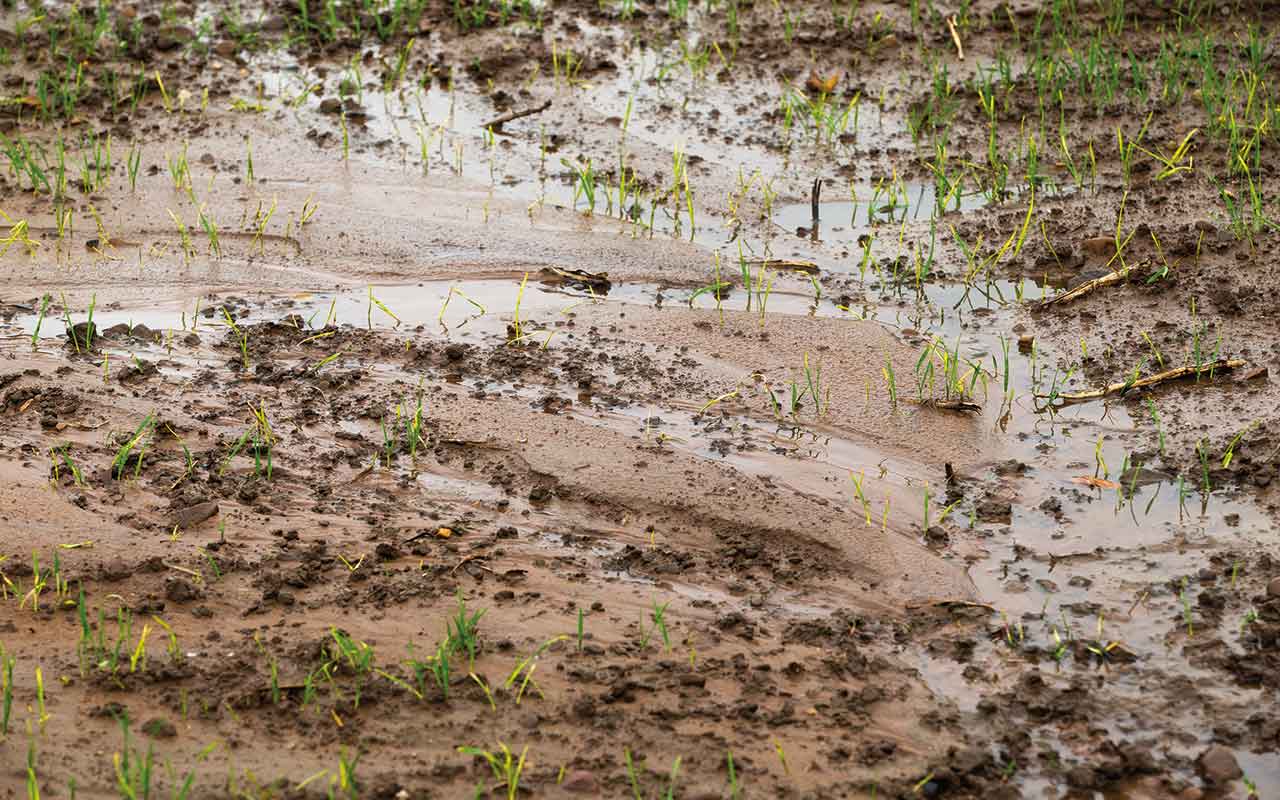
Blackgrass’ ability to withstand waterlogged soils would be invaluable in cereal crops © Tim Scrivener
Fascinating genetics
Dana describes the genetics of blackgrass as ‘fascinating’, particularly the speed with which it can adapt. Work by Rothamsted and collaborators looking at the genomes of different blackgrass populations has shown that resistances that have evolved in the field are not all caused by the same thing, even though two populations may behave the same.
That blackgrass can withstand herbicides is not always due to the same evolutionary changes, although there are some similarities between populations.
The research has shown that blackgrass gene families known to cause herbicide resistance and stress resilience are expanded compared to other grass species.
And, intriguingly, blackgrass also has genetic material that is carried outside its chromosomes. Blackgrass, and other weeds such as Palmer amaranth, have what is called extra-chromosomal circular DNA (eccDNA) – chromosomes that have been copied and moved out into self-replicating, autonomous circles that are free within the cell.
The eccDNA allows the plant to increase the number of proteins and explore variations on those proteins, quickly trying out different things in response to a challenge. “The speed of this is interesting – it can happen in a generation,” Dana says.
The question is what blackgrass’ intelligent genetics will do for future target- and non-target-site resistance (TSR and NTSR). TSR is where changes to the protein prevent a herbicide from effectively binding to it, while NTSR prevents the herbicide from getting there.
She likens it to a door and a lock. A herbicide locks the door, closing it so the plant can’t escape and dies. The trouble is that eccDNA then creates a different door requiring a slightly different key.
Regardless of the chemistry pipeline and new modes of action, the genetics will react to them.
Further cultural diversity
That is why Dana thinks more emphasis should be placed on boosting cultural diversity. How that is delivered isn’t her area of expertise, but it might be the only option to control a weed that is very adaptable and happy in current arable systems.
“One adapted plant can become hundreds in a generation. The more vigorous plants we are seeing now could be the result of a few plants producing bigger heads as a response to an environmental or system change that also survived control,” she says.
These cultural ideas might have to be quite radical. “In research, there’s a saying; do the same thing and you’ll get the same result,” she cautions. She doesn’t know if other weeds have the same adaptability, but suspects they might.
The work is now expanding to look at the weed’s ability to cope with other stresses such as drought and temperature. Dana says resistance development is well understood, but other behaviours need more study. “We know blackgrass plants are bigger and produce more seeds, but we need to understand how it has done this, plus issues such as when it decides to drop seeds in both spring and winter crops.”
She is also looking into resistance. Although it is better understood, a grey area with blackgrass is the performance of group 15 herbicides such as tri-allate and flufenacet. These have retained a high degree of sensitivity despite prolonged use.
“Although these are in the same chemical class, there is probably some diversity in how they work at the target site and getting there.”
Benefits for wheat
Of course, it could be the genetics of blackgrass that allows us to make wheat more adaptable and tolerant to disease and climate change. “If you have a plant that can resist 30 days of water, it would be invaluable to bring that across to cereal crops. We just need to figure that out, something my Rothamsted colleagues are no doubt working on,” Dana says.
Niab’s head of agronomy services, Dr Mark Fletcher, believes more cultural measures will need to be introduced. Many growers have opted to drill later, plant more spring crops and undertake rotational ploughing, but this might not be enough in the future.
“In any ecosystem, it is survival of the fittest. If something is exposed to repeated treatments and environments, nature adapts and then tolerance or resistance becomes a possibility,” he says.
There is plenty of documented evidence on extending cultural measures. Experts have pointed to the merits of more competitive winter crops, such as hybrid winter barley, introducing pasture, spring maize replacing part of the spring barley area, or even something more novel.
Indeed, in variety trials Mark has noted that some wheat varieties not on the Recommended List have exceptional vigour, offering the ‘get up and go’ to compete with grassweeds.
Cropping diversity delivers further variation; drilling dates, cultivation strategies and greater variation in herbicide actives. Mark is working on more diverse herbicide programmes, including chemistry perceived to be less effective. “If newer, more potent actives remove a population that had increased tolerance to established chemistry, surviving populations could be more sensitive to it.”
Adopt veg sector hygiene
Diversity also needs to be matched by best practice. Mark says cereal growers can learn from vegetable growers, who undertake a rigorous approach to hygiene in the battle against clubroot. “Even a bale trailer could risk spreading seed from field to field,” he says.
He also believes a more judicious use of seed rates is required in some situations. “The varieties and seed rates we use will need to be considered in any future action plan. This isn’t just about speed of development and smothering grassweeds – herbicides can potentially affect seed germination and hence establishment. Therefore, the seed rate needs to increase.”