
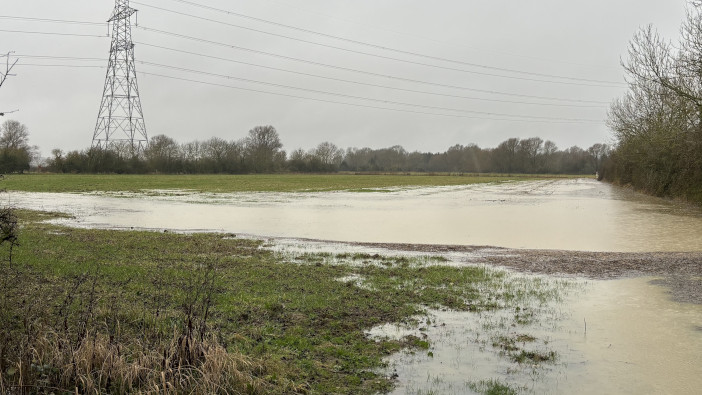
Testing is needed to ascertain soil condition following high rainfall experienced throughout most of the UK this winter.
The University of Reading has recorded the longest unbroken spell of rain in the history of its Atmospheric Observatory, with 25 consecutive days of rain. Northern Ireland experienced the wettest start to a year since records began and many areas of southern England and Wales have seen significant damage caused by storm Goretti and subsequent extreme weather.
Shane Brewer of Eurofins Agro UK believes that waterlogged crops or crops trapped under flood water for more than 15 days will almost certainly be lost. However, the longer-term damage to soil health can only be ascertained by testing regularly once the flood waters have subsided.
“Soil testing will identify the levels of bacteria, fungi and protozoa in the soil. Eurofins also offers suggestions for what can be put back into the soil which will improve the efficiency of fertiliser use and also help cultivation decision-making,” he says.
The roots of flooded plants stop taking up nutrients and methane is produced in the soil instead of carbon dioxide. Ethylene also builds up in the plant roots, which will subsequently affect the way any new seeds germinate.
“Should a farm choose to abandon a winter crop and sow a spring crop, a soil test will be vital to understanding how that crop will need to be treated,” he adds.
Microbial populations decline when soils are flooded, and aerobic bacteria are replaced with anaerobic bacteria, which produce gases like methane and nitrous oxide. The reduction in oxygen in the soil will also cause earthworm numbers to fall as they move on or die.
“Flooding washes away topsoil that farmers have spent time and money improving. Topsoil contains the phosphorus, nitrogen and carbon that will help a new crop grow. Without it, farmers will need to understand what levels of inputs are needed to help soil recover.”
Soil compaction is also a concern because when hit by heavy rain, compacted soil lacks the air space to absorb water. This sees rain run off the land, taking topsoil and nutrients with it.
“Deeper soil can absorb more rain, but in the UK we have large areas that have suffered years of compaction and lack the depth needed to cope with the sort of rain we have experienced this winter. To get the most out of compacted soil, testing will be required to help cultivation decisions, such as whether to plough, if minimum tillage options are not deemed suitable,” he concludes.