
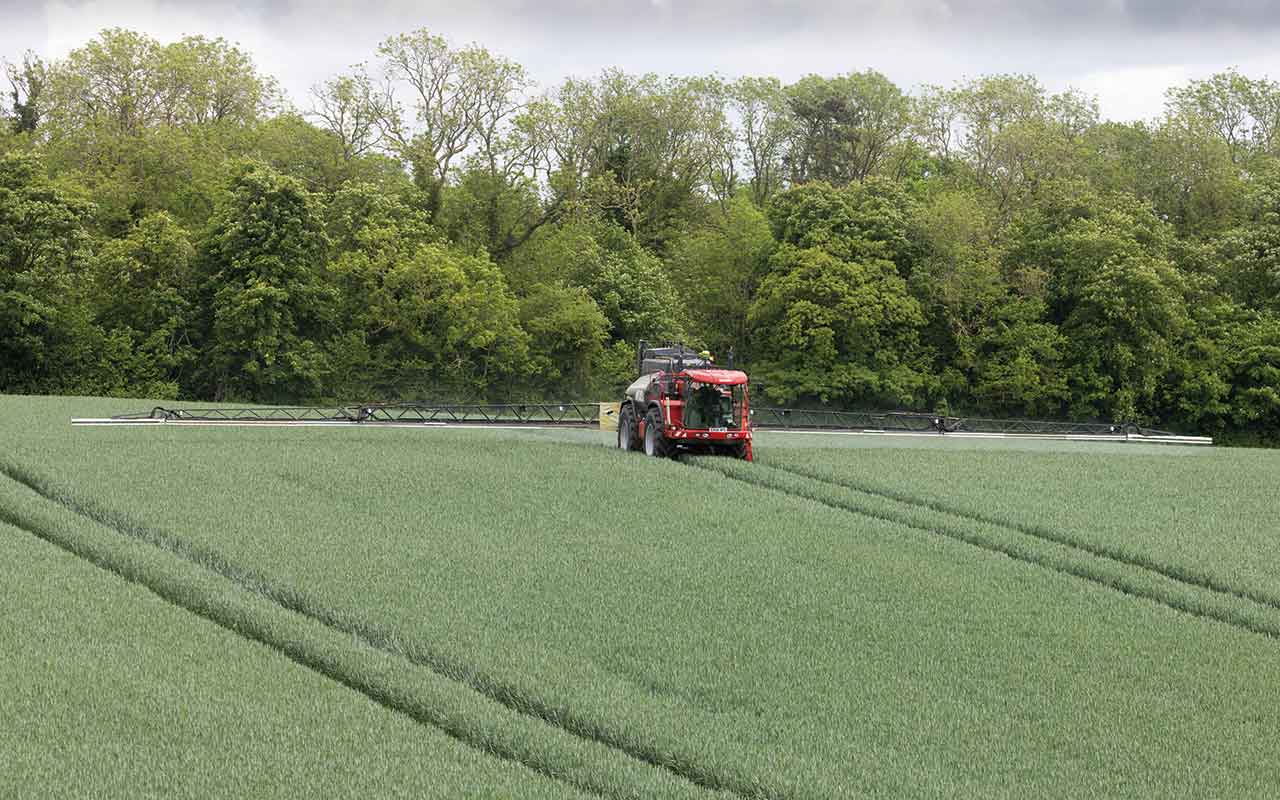
Ever since the arrival of new-generation succinate dehydrogenase inhibitors (SDHIs) in 2010, they have been – in combination with azoles – the cornerstone of winter wheat disease control programmes.
However, preserving this potent but high-risk chemistry requires resistance management best practice, which includes using active diversity in mixes and sequences.
To help matters, the first cereal Qii, fenpicoxamid, appeared in 2021. To test the merits of Qiis to optimise resistance management strategies, Corteva asked Adas to undertake trials to put a value on what it could mean for preserving existing and future SDHI chemistry.
The results suggest it could double the lifespan of SDHI chemistry, and if you add in a multisite like folpet, it could extend it even further. “We have seen pathogens that have become insensitive to chemistry or particular products. With single-site actives at higher risk, we have to do all we can to preserve our products,” says Adas research Mike Grimmer.
The work substituted an SDHI with Univoq (fenpicoxamid + prothioconazole) at either T1 or T2, using combinations of Vimoy (isoflucypram) with Miravis Plus (pydiflumetofen). Reflecting common field practice, the isoflucypram + azole combination was applied at T1, followed by pydiflumetofen and its azole partner.
Chemistry pipeline does not deliver a ‘reset’
Niab senior research scientist Dr Aiofe O’ Driscoll says the chemical pipeline is encouraging, but, realistically, nothing that is set to arrive imminently resembles a ‘reset button’.
“Using current SDHIs in combinations – with a Qii [fenpicoxamid]limited to a single application – remains the most sensible approach. Diversity isn’t just about new modes of action, it’s also about how we steward the ones we have.”
Like Corteva’s Mike Ashworth, she endorses the use of multisite chemistry. “Despite variation in yield responses, largely due to seasonal effects and a lack of activity against mildew and rusts, multisites still provide a resistance management benefit.
Even when the agronomic value appears modest, they can help reduce selection intensity, and incorporating them in high-septoria scenarios is good practice if we want to preserve the efficacy of single-site actives for as long as possible,” Aiofe says.
Benefit of computer modelling
To undertake the work, Adas turned to a fungicide resistance model, developed some years back to track septoria resistance development in wheat.
Populated with field mutations and how much resistance selection has taken place, it can evaluate the effectiveness of multiple fungicide strategies and numerous combinations of product and dose – more than what is possible in the field. For reassurance on the results, the data has been validated with field experiments.
The model is designed to track the key processes that drive resistance, using a series of equations to monitor what John calls canopy dynamics.
It tracks canopy development through the season as leaf layers emerge, green leaf area changes and leaves die off. Disease infection and the proportion of infection that is sensitive or not cycles over this time, based on known fungicide performance and rates reflective of field use.
If you do that over time, you can generate a selection pressure value based on the effect of the increasing frequency of the resistance stain on the leaf area index.
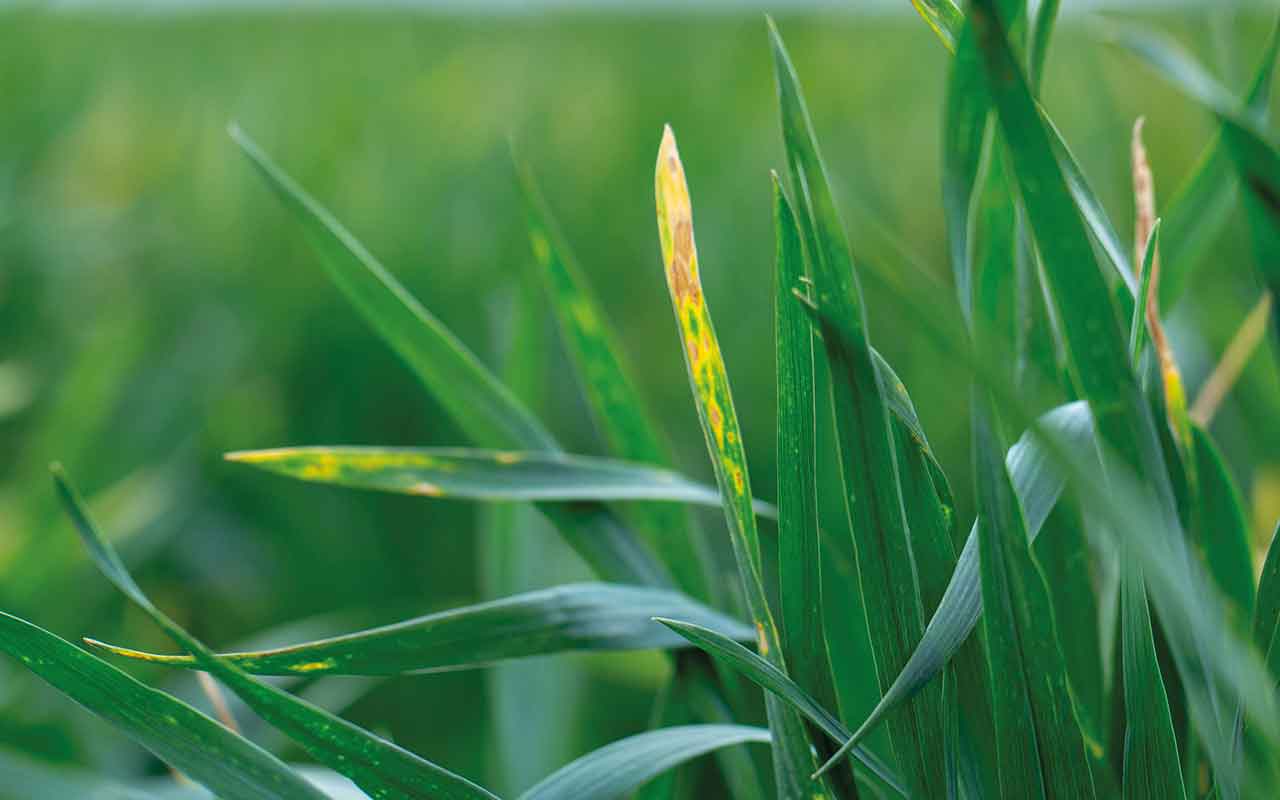
New SDHIs entering the market go into an environment with an existing resistance mechanism © Adobe Stock
Developing fungicide strategies
“The aim of this work is to develop fungicide strategies that can effectively prolong the life of a current mode of actions as long as possible,” says Mike.
Where the SDHI was substituted with the Qii at T1, it produced a 50% increase in the life of the SDHI chemistry, while it doubled at T2. “The reason isn’t about the T1 and T2,” adds Mike. “It was just in the data set we used; Miravis was more active.
“Using SDHIs repeatedly in a programme accelerates selection and risks shortening the useful life of the whole group. Programmes built on alternation rather than repetition are more resilient, and swapping an SDHI with a QII reduces that selection pressure, helping to extend the effective life of the chemistry,” he stresses.
Mike Ashworth, Corteva’s category marketing manager for fungicides, highlights the risk to new chemistry. “We sit today with resistance to azoles and SDHIs, so any new SDHIs entering the market go into an environment with an existing resistance mechanism, a mechanism that will start working away immediately.”
He welcomes the arrival of more potent SDHIs, but points out that as stronger SDHIs enter the market, it creates a stronger selection pressure. He sees using both isoflucypram and pydiflumetofen as akin to a selection ‘double whammy’. “Both are highly active against septoria, but both have the same mode of action, so they create a pull on selection pressure.”
Diversity is key
This is why, with only three sites of action, programme diversity is critical. “Truly balanced actives mixes are hard to achieve. Qiis have a unique mode of action, breaking the reliance on azoles and SDHIs, not only boosting resistance management strategies, but also delivering effective septoria control.
“But any chemistry relies on other modes of action for support, including multisites. Although they are not stand-alone products, they support resistance strategies. Through diverse modes of action, the chemistry supports each other.”
Mike adds that restricting the use of fenpicoxamid to a single use during a season was a deliberate policy, based on resistance management principles, and the company has no plans to bring more diverse mixes of its Qii to the market. It has concerns that exposing a pathogen to all three active septoria chemistries at once could hasten the onset of resistance.
Corteva also has no immediate plans to seek authorisation for its Qii in barley. “While there is resistance to some actives, mixes are still providing effective control of barley pathogens. However, fenpicoxamid has useful activity on a range of diseases, including net blotch, and is particularly active against ramularia,” says Mike.