

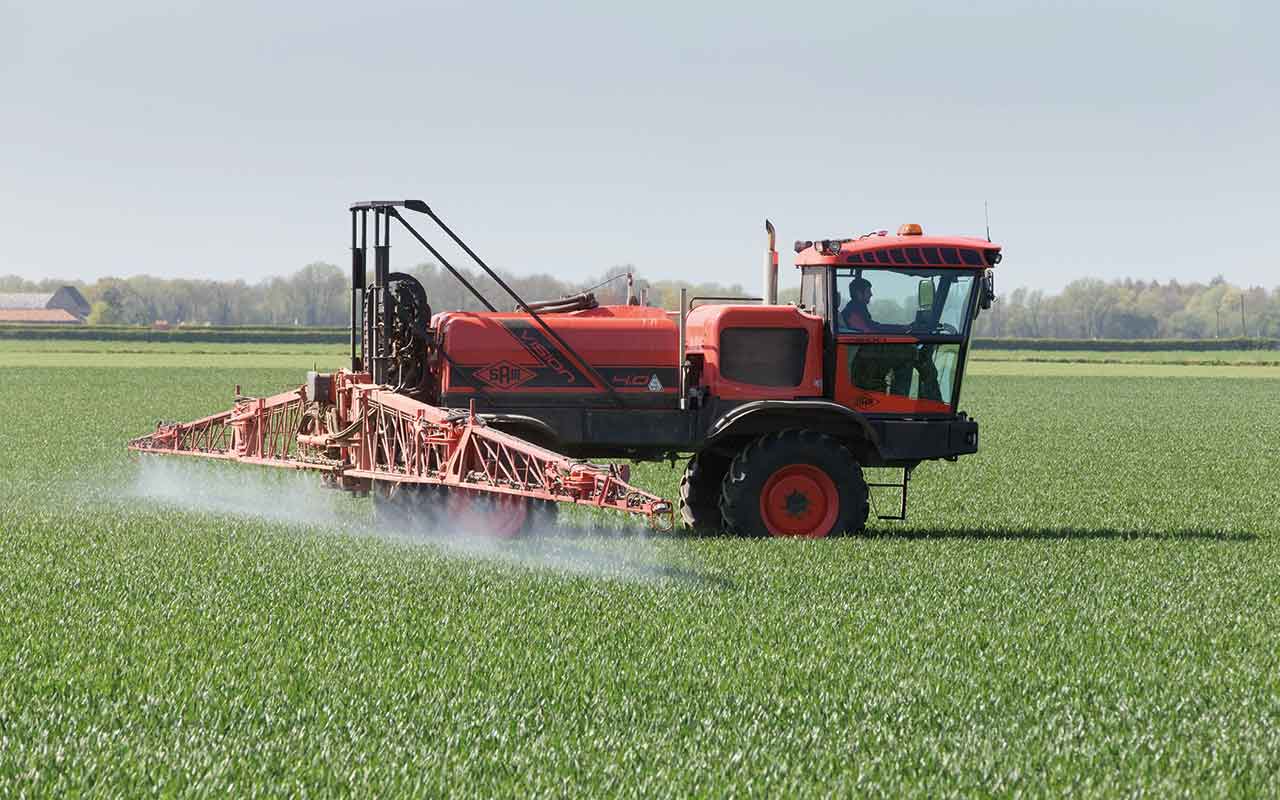
It has been a tricky start to the year, with a period of extensive wet weather and urea in short supply for some. Growers therefore need to think about how they will achieve nutrient use efficiency (NUE), says DJL Agriculture’s Daniel Lievesley.
He feels a lot of nitrogen might be lost, with growers forced to apply ammonium nitrate to high-pH soils, leading to ‘non-functioning’ anaerobic soils.
If that causes denitrification – where bacteria convert nitrogen trioxide into nitrous oxide or nitrogen gas, which is then lost to the atmosphere – nutrient uptake will be compromised. It can also knock back soil biology, which is concerning, as a healthy ecosystem is needed to get nutrients into the plant.
“With current high fertiliser prices, it is even more important to implement management practices that minimise nutrient loss and maximise crop uptake,” Daniel says.
Ammonium conversion
“When urea is applied to soil, it reacts with water and the soil enzyme urease, and is rapidly converted to ammonium. This conversion, coupled with the chemical reaction below, is called urea hydrolysis. In this reaction, hydrogen ions are consumed, causing the soil pH near the fertiliser to rise. If the pH rises above 7, a significant amount of gaseous ammonia can form in the soil after an urea application,” he explains.
When soil temperature rises above 10C, to support biological activity, ammonium ions are converted to nitrate gas by the soil bacteria in a process called nitrification.
“After nitrification has converted ammonia, the negatively charged nitrate ion is no longer held by negatively charged clay and organic matter. Nitrate-N can be lost from soils by leaching or denitrification,” Daniel adds.
Leaching is defined as moving nitrate-N below the root zone of plants. Sandy soils are more prone to this loss, but it can happen with heavy rain in other soils. Denitrification is where nitrate nitrogen is converted back into gaseous nitrogen and lost to the air as nitrogen or nitrous oxide gas in very wet or saturated soil.
“Plants can absorb nitrogen as both ammonium or nitrate. Therefore, the goal of products that enhance nitrogen use efficiency is to hold nitrogen as ammonium until uptake by plants, so there is little risk of loss [except on sandy soil that cannot bind much ammonia].”
Nitrification inhibitors are now common – compounds that slow the conversion of ammonium nitrogen to nitrate nitrogen, prolonging the period that nitrogen is in the ‘protected’ form and reducing its loss from the soil.
However, Daniel says there are alternative options that have given good results using microbes that convert atmospheric nitrogen into plant-available nitrogen. “The nitrogen in the air cannot diffuse into the soil if conditions are wrong. Anaerobes can create soil toxins such as formaldehyde in the wrong conditions – for example, wet and compacted soils.”
Microbes use carbon from plant roots and convert nitrogen gas into ammonia and pernitrate. Nitrogen fixers deliver ammonium near roots without leaching risk. Cellulose degraders also give early residue barriers, such as Bacillus spp that outcompete harmful pathogens.
“We’re seeding the soil with microbes that unlock nutrition, clean up residue and protect the seedling for a healthy plant. Even though soils may contain several nutrients, growers need to remember that availability may be limited. In my view, we also need to move away from salt-based fertilisers that have a negative effect on soil biology,” Daniel says.
“By using biological products, we’re not just feeding the crop, we’re also improving the soil it grows in.”