
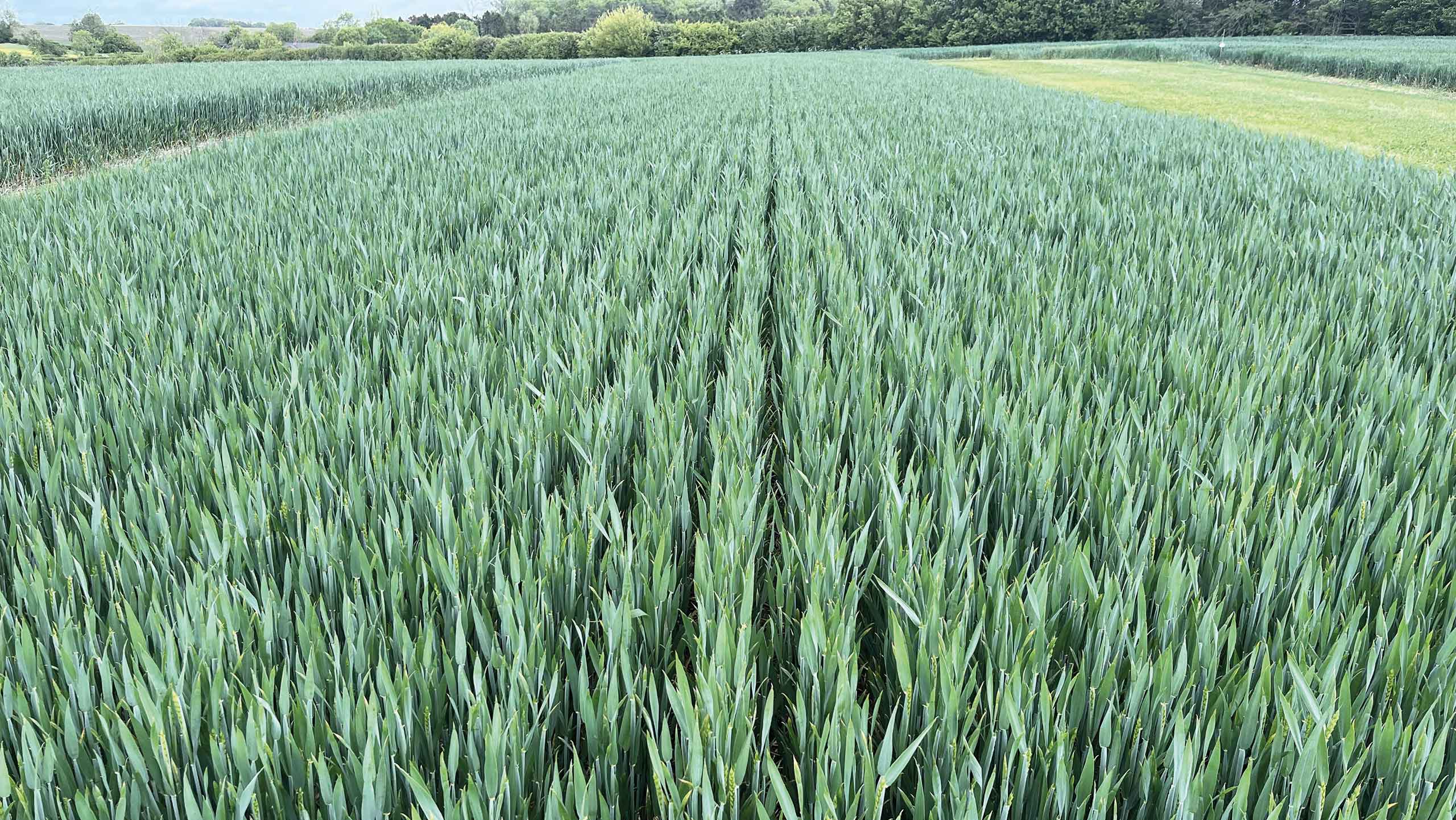
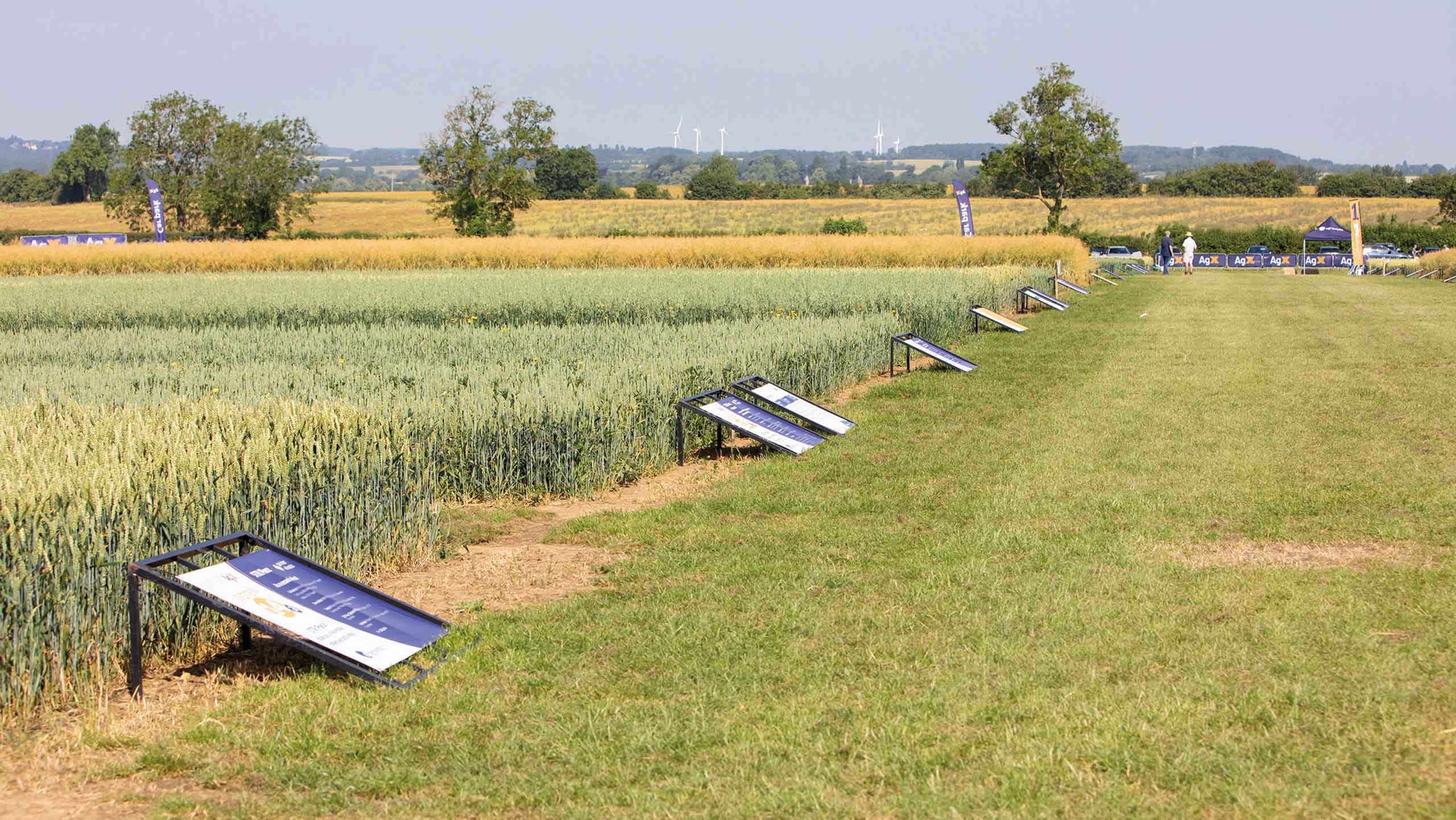
When Agrovista Farming Systems research and development adviser Niall Atkinson first arrived at the company’s flagship UK trial and research site at Lamport, he couldn’t believe the grassweed burden at the site.
Despite extensive herbicide and cultivation matrix trials, it was clear all approaches were failing.
Thirteen years on and the grassweed threat is much more under control. More importantly, Agrovista has moved back to September wheat drilling.
“We’ve also shown August drilling is possible with the right strategy,” says Niall.
During this time, the site moved to what he describes as a ‘systems approach’. The work at Lamport isn’t a blueprint for every farm, but a model that can be adapted to suit others.
“Few farms are identical, so all need a tailored approach, but the Lamport concept is a base that many can work from,” he says.
It is essential to have a rotation that provides a long-term foundation for keeping grassweeds in check and maintaining healthy soils. The primary aim is to drive winter wheat performance, with a secondary aim of supporting spring crops.
All cereals are now direct-drilled, with cover crops at the core of the system. “The power of cover crops is amazing,” says Niall.
“The nutrient capture, water infiltration and retention, together with the soil restructuring capabilities of roots, are phenomenal. Soils cope better with weather events and recover quicker.”
He admits he was sceptical at first and, like many, keen to invest in cultivation technology. “The truth is that many of us are happy cultivating,” he adds.
But seeing is believing, and Niall is now a convert to a system that keeps the ground covered, with minimal soil disturbance.
© Agrovista
Plot comparison
Something that helped him on the journey was comparing plots using a conventional approach of intensive cultivation and no covers, where the ground had been cultivated ahead of establishing a wheat crop, with plots where wheat had been established by direct drilling, and covers regularly grown.
“It’s the sort of soil that soon runs together. Shortly after drilling, we had 150mm of rain in a 24-hour period. Plots established under a conventional regime were soon waterlogged and soil capping followed, resulting in several bare areas.
“In comparison, the direct-drilled plots established nicely, with full ground cover. We have found that the more we move soil, the more blackgrass proliferates at Lamport. This is a key learning point.”
As a result, Niall avoids any cultivation just ahead of establishing the cash crop and favours drills that place the seed with little soil movement.
Continuous wheat trial promise
Maximising the benefits of covers in the rotation will require an increase in spring cropping for some, and Agrovista research and development adviser Niall Atkinson accepts that choosing reliable spring break crops can be challenging.
This is why he has been investigating growing continuous wheat, but with a difference. At Lamport, trials alternate between winter wheat, followed by a cover crop/spring wheat, then back into winter wheat.
“To date, winter wheat has yielded 9-10t/ha and spring wheat 5-6t/ha in our continuous wheat rotation trials,” Niall says.
“Grassweeds are well controlled and we continue to build soil health. This approach may well suit some growers, allowing for big savings to be made in both fixed and variable costs.”
Cover crop power
Another trial that stood out for him was wheat direct-drilled after a winter cover, followed by a summer catch crop. “This trial really showed the power of a cover crop. We saw significant yield improvements over a range of treatments where covers were included in the rotation.”
In a five-year conventional rotation trial of two winter wheats, OSR, winter wheat, followed by spring oats, the establishment cost averaged £216/ha. In comparison, the ‘regenerative rotation’ – replacing the second winter wheat with a cover crop/spring wheat, and a cover crop ahead of spring oats – averaged £151/ha.
Niall isn’t against cultivation; he appreciates that in some situations remedial work may be necessary, and occasionally roots may require some help to penetrate a shallow layer of compaction.
Ploughing still has a place where particular issues need to be dealt with, such as bulky residues, badly damaged or rutted soils, severe weed infestations and vegetable rotations.
Ploughing hasn’t been undertaken at Lamport since 2014, as the silty loam didn’t plough well. The lesson for those who do plough is to do it well.
“Grassweed seeds need to be buried at the bottom of the furrow, and then leave them there. Try to leave as long an interval as possible before returning with the plough,” Niall says.
“But don’t underestimate the power of roots. It’s about managing soils throughout the year, keeping them biologically active. It’s also about attention to detail – the simple things like tyre pressures and axle loadings, doing whatever it takes to preserve soil health and structure.”
Vital role of spring crops
The other core of cultural weed control is spring crops, allowing for cover crop integration into the rotation. Niall understands the frustration growers can have with spring crop performance. This season, spring wheats only achieved about 5t/ha. However, if wheat achieves about £200/t, Niall expects to see a small return.
Regardless of their financial contribution, he believes spring crops add up. Any grassweeds are dealt with when the cover crop is sprayed off.
“We’re not looking to smother the weeds with the autumn cover crop; we actively encourage them to grow, even undertaking some shallow cultivation to help them along.”
The timing of winter cover crop destruction is also important. “We found that if we have not desiccated the cover crop in good time and there is too much biomass still on the surface, we get smearing with the drill. Decaying residue on the surface will hold moisture in the spring,” Niall says.
“Our strategy has been adapted to conform with Sustainable Farming Incentive guidance, using mixes that satisfy the rules, but also naturally senesce over time, allowing slightly later destruction timing of the remaining covers, about six weeks ahead of planned sowing of the cash crop.”
Typically, this is now done in late January or early February, allowing the cash crop to be drilled from late February to early March as and when conditions allow.
Niall’s preferred method is to spray off covers with glyphosate. This generally requires two applications, the first to take down the cover crop and the second, if required, to clean up any remaining grassweeds that may have been shielded by the cover crop.
Mechanical destruction of the covers has occasionally been successful, with a set of rolls on the very odd occasion that a good frost has allowed the tractor to travel. But mechanical destruction will not destroy all grassweeds, so an application of glyphosate close to drilling time is essential to capture any remaining vegetation.
With Lamport now through its 13th harvest, the attention to detail has paid off. Given these system changes, winter wheat is profitable again at a site that experienced high grassweed pressure.
“We have measured big improvements to the overall soil health on the site over time following changes to the rotation, cultivations and, most importantly, the integration of covers,” Niall says.
Earthworm boost
Most noticeable is the big increase in earthworm numbers. Lamport data shows earthworms have increased significantly.
Cover crop plots with little or no tillage have always had more than no-cover control plots, with or without tillage – in some seasons four times more. Infiltration rates of close to 15ml/min have been recorded, again significantly above plots without a cover crop.
“We’ve undertaken soil analysis from the worm casts and found these to be much more nutrient-rich, especially in phosphate,” he adds. “Worms contribute massively to nutrient recycling, soil aeration and improving infiltration. We’ve done all we can to preserve and build numbers.”
Early establishment of covers is absolutely key to maximise the benefits – the earlier, the better. “We find a five- or six-way mix of species that we know grow well on this site is far more beneficial than much more complex and expensive mixes where several species often fail to establish.”
Equally important is destruction timing, both for practical considerations of enabling the seedbed to dry in the spring and also to allow time for captured nutrients to be released back into the soil to benefit the planned cash crop.
Aim to destruct a minimum of six weeks ahead of planned sowing, possibly earlier if not restricted by any scheme rules.