
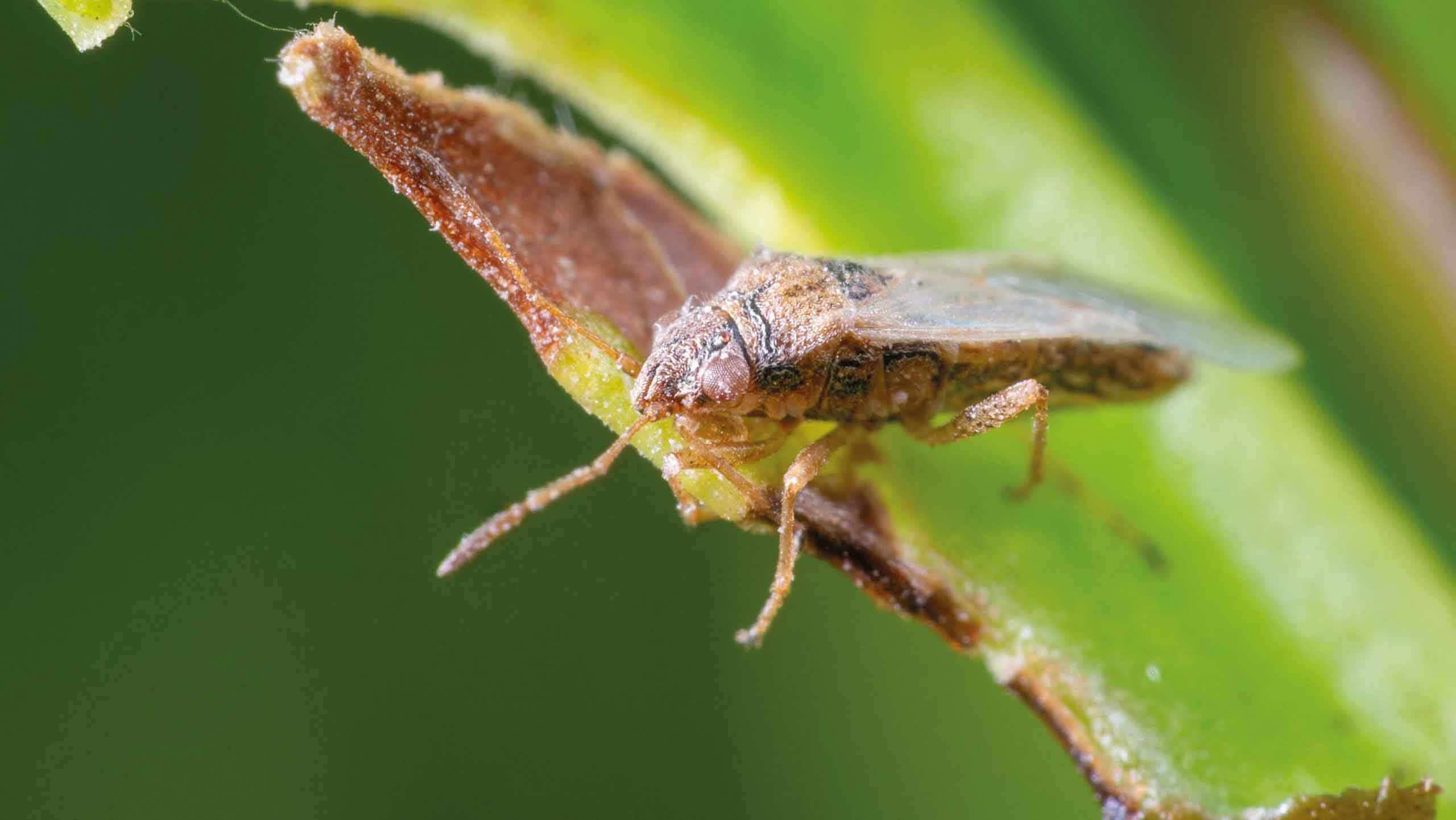
For Farmacy agronomist Gemma Pavey an ‘exotic summer’ has brought exotic challenges. In her southern counties region the nysius bug has joined a list of pests that threatened crops last season and could also be a problem this season. “I know of some OSR stubbles that are full of them. These can easily migrate to this season’s crop if in close proximity.”
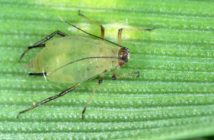
She also fears another season of high barley yellow dwarf virus (BYDV) pressure. Tolerant and resistant varieties are in high demand and in short supply following last season’s poor seed crop yields.
Gemma had to make up to three applications in winter wheat last season, and she doesn’t want to have to do the same this year, although she admits options are limited.
Grazing trial success
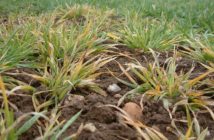
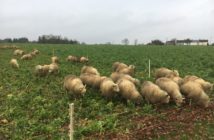
One cultural control that appears promising is grazing. Trials carried out by Farmacy have shown that grazing can be just as effective as spraying. Comparing a tolerant variety that was exposed to three grazing regimes to a standard variety that was sprayed twice revealed similar yields.
“Obviously, introducing livestock to an arable system has complications, even with virtual fencing technology. But such measures could be useful going forward. It could be that a spray is followed up by grazing.”
Further trials have shown that earlier grazing could be better (November), taking the green area away sooner. But getting livestock in the field at the right time isn’t always easy, and this year’s January-grazed crops yielded well.
For Gemma, it offers some hope. She feels integrated strategies will be essential as resistance concerns grows and scrutiny increases as retailers look to drive sustainable food production. “The untreated, standard variety plots were devastated by it. We need a sustainable management solution,” she says.
Many growers in the region have resisted the temptation to drill wheat early, but keen to get things moving, some started cultivation. Gemma understands the choices growers have to weigh up, especially those with large areas to drill, but she worries about the weed burden.
© Adobe Stock
Weed concerns
“It was too dry in August for the weeds to chit, so moving the ground only protected seeds from the elements. With September remaining dry, we are likely to see a huge flush in October when wheat is going into the ground,” she says.
“This could place huge pressure on the chemistry. Moisture is needed to activate many pre-emergence herbicides, some of which have short half-lives anyway. September-applied pre-emergence sprays will have limited efficacy.”
With higher pressure likely, she advises holding back the big gun of cinmethylin, first going with something like flufenacet + diflufenican – with or without aclonifen. “This will hold everything and ensure the best bang for your buck from the most potent chemistry later on,” she adds.
Where ryegrass is the primary target, Gemma will opt for an aclonifen- and bixlozone-based approach at the pre-emergence timing and follow up with cinmethylin. Her view is that autumn control is critical, and a spring application of mesosulfuron-methyl + iodosulfuron-methyl-sodium + amidosulfuron is of limited value.
Given that the warm weather continued throughout September, she expects 170-day-degrees T-sum targets to be reached quickly. With pre- and post-emergence timings compressed into less than two weeks to maximise the herbicide stack efficacy, it is likely to coincide nicely with BYDV applications.
Abundant armyworm
Armyworm is another exotic pest Gemma has had to contend with. “Many of my sweetcorn growers irrigated, and that helped the crop get up and away. But this pest will need managing in future.
“The native species is still sensitive to treatment, but Continental migrants aren’t sensitive to pyrethroids. Coragen is useful but expensive. The trouble is that the species are difficult to tell apart, so testing will be required. There is no real cultural control option apart from a cold winter.”
She feels more information is needed about the nysius bug. “It’s a novel pest to contend with in the UK, and we don’t know the impact yet. It can be very damaging to oilseed rape, but I understand it can affect cereals as well,” says Gemma.
Because it is new here, she points out that there is no product with control on the label, although some have suggested that some BYDV and cabbage stem flea beetle products are active.” Those spraying for either might see some control. But it is something the industry needs to address, and quickly,” she says.
September wheats ‘up and away’
In the North, the contrast couldn’t be bigger. Most of Procam agronomist Nigel Scott’s Durham and Yorkshire winter cereals area was in the ground by early September. With rain falling ahead of the August bank holiday, many growers took the opportunity to make use of the moisture and drill in the last few days of the month, or in early September.
Farming is a business at the mercy of an increasingly volatile climate, and growers have to balance getting a crop away or holding their nerve.
“Most winter cereals are fully up and at the two-leaf stage,” Nigel says. With crops being so early, the BYDV threat could be high this season. “Last year there were pockets. This season I think it will be more widespread and repeated sprays could be necessary,” he says.
Although 340 miles separate Hampshire and Northumberland, Gemma and Nigel share the same concerns. “We’ve had huge problems with armyworms. Some beet crops are like skeletons,” Nigel says. “There are also plenty of cabbage stem flea beetles around. Some crops have been lost already.”
Looking longer-term
If exotic insect species are to arrive on the south coast and head north because of climate change, Nigel questions whether even greater cropping diversity will be required for some.
“If we are going to see evolving pest and disease pressures with climate change, to help break pest and disease cycles we might have to evolve our systems accordingly. Here, grass in the rotation has served us well. Adding cropping diversity, through the introduction of livestock or by other means, might be required for others. Relying on the repeated use of insecticides isn’t sustainable.”
Looking ahead, Nigel is concerned about the disease pressure cereals might face in the spring. Septoria is always a threat, but he questions whether a T0 application offers that much protection against the disease. Unless the pressure is exceptionally high, a T0 will target yellow rust. And with good reason.
The disease was widespread last season, with growers struggling to find alternatives to varieties affected by the Yr15 resistance gene breakdown, or reluctant to change given the varieties’ regional suitability and performance. “Again, there is plenty of Dawsum, Typhoon and Beowulf in the ground, although some have managed to obtain Defiance and Challenger,” he says.
Nigel is pleased to see RGT Guardsman on the list. He feels BYDV-tolerant and -resistant varieties will be important in future, and many new varieties in the pipeline have characteristics that suit the region.
He shares Gemma’s concern over herbicide efficacy this season, given the dry conditions. “Increasingly, herbicide selection is becoming a choice of picking products for the conditions – a combination of efficacy and life expectancy, depending on environmental factors,” he warns.
Blackgrass control tips
Hutchinsons technical manager Dick Neale has plenty of experience with blackgrass. Here are his control tips:
Grow a variety blend for a blackgrass-beating root system
Work at the Hutchinsons blackgrass trial site at Cambourne indicates root competition can be enhanced by using variety blends, with trials recording a 60% reduction in average blackgrass headcount when moving from a single variety to a PrimeStart placement, fertiliser-treated blend of four varieties
© Adobe Stock
Drill earlier
As blackgrass numbers fall, it is time to think about drilling winter wheat earlier to further boost crop competition against blackgrass, Dick says. “Depending on the weather, forget about 15 October and bring drilling dates forward.”
Tailor seed rates to row widths
Increasing seed rate is a common strategy to boost crop competition with blackgrass, but with wider-row drills, this approach can be counterproductive for blackgrass control, says Dick.
In trials at Cambourne, the best blackgrass control was consistently achieved using a winter wheat seed rate of 375 seeds/sq m, while control was poorest at 412 seeds/sq m.
Make use of flufenacet while it is still available
Despite the proposed sanitary and phytosanitary agreement, the UK is expected to follow the EU position on flufenacet and withdraw its approval for use in GB within the next two to three years. Growers should, therefore, make use of these flufenacet products while they are still available.
Post-drilling/pre-em glyphosate requires good soil moisture
With an application window of only a few days for this approach, good soil moisture and germinating grassweeds are essential. “If it’s dry, forget it, but if conditions are right, you can get a very useful increase in control from the pre-em by adding in that little bit of glyphosate,” says Dick.
Use the right nozzles
Three- or four-star-rated Lerap nozzles are typically specified for pre-emergence residual herbicide applications, alongside an environmental buffer zone, but in most cases there is no need to use them across the rest of the field, Dick points out.