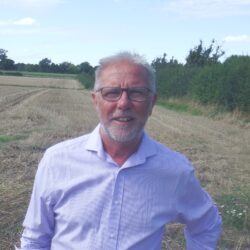
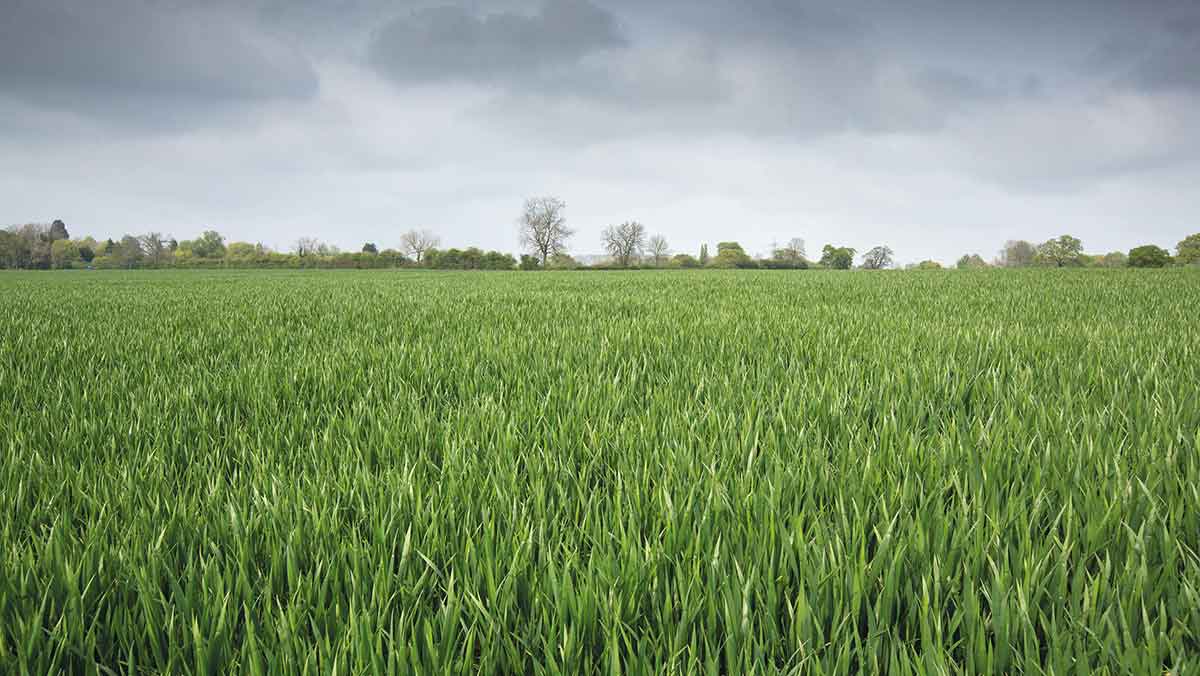
With margins under pressure, incremental gains can make a difference to the bottom line, which is one reason why Heathcote Farms director Andrew Robinson is keen to explore new ideas and test farm technology.
Last season, Andrew pitched himself against an artificial intelligence (AI)- devised cereal disease fungicide programme. With the flag leaf responsible for the majority of yield production, that is where he focused his investment. The AI platform built its programme around a robust T1, and when it came to margin over input cost, it won.
Although a little peeved, he was rather pleased too. If it helps the business grow, that’s a good thing. “It’s not about winning, what’s more important is learning,” he says. This is why the AI versus human test will be extended this season.
OptiGene test extended
Last season, Andrew also tried OptiGene’s disease prediction tool. It is a mobile DNA scanner that allows growers to detect the presence of disease pathogens before they become visible.
He admits it wasn’t perfect, but it showed sufficient promise for him to try it again, especially as the company has made several refinements based on grower feedback.
“What I want is real-time data coming in from the field, allowing me to make better-informed decisions, quicker. Last season it took too long to collect and evaluate the data coming in from the field, although it is better than using a microscope to help me spot the first signs of disease and quicker than sending leaves off to a lab.”
Some might consider Andrew’s attention to detail a touch obsessive, but as he points out, time isn’t always on his side. “If a disease like Septoria tritici takes hold, it can ravage a crop. There are no curative options these days – you’ve got to stay in a protective situation.”
Whether OptiGene will be the tool employed, he can’t be sure. A chance conversation with someone in the military revealed the sophistication of camera technology. “In the future, I’ll be getting a heads-up to emerging disease and pest threats from a mile high,” he adds.
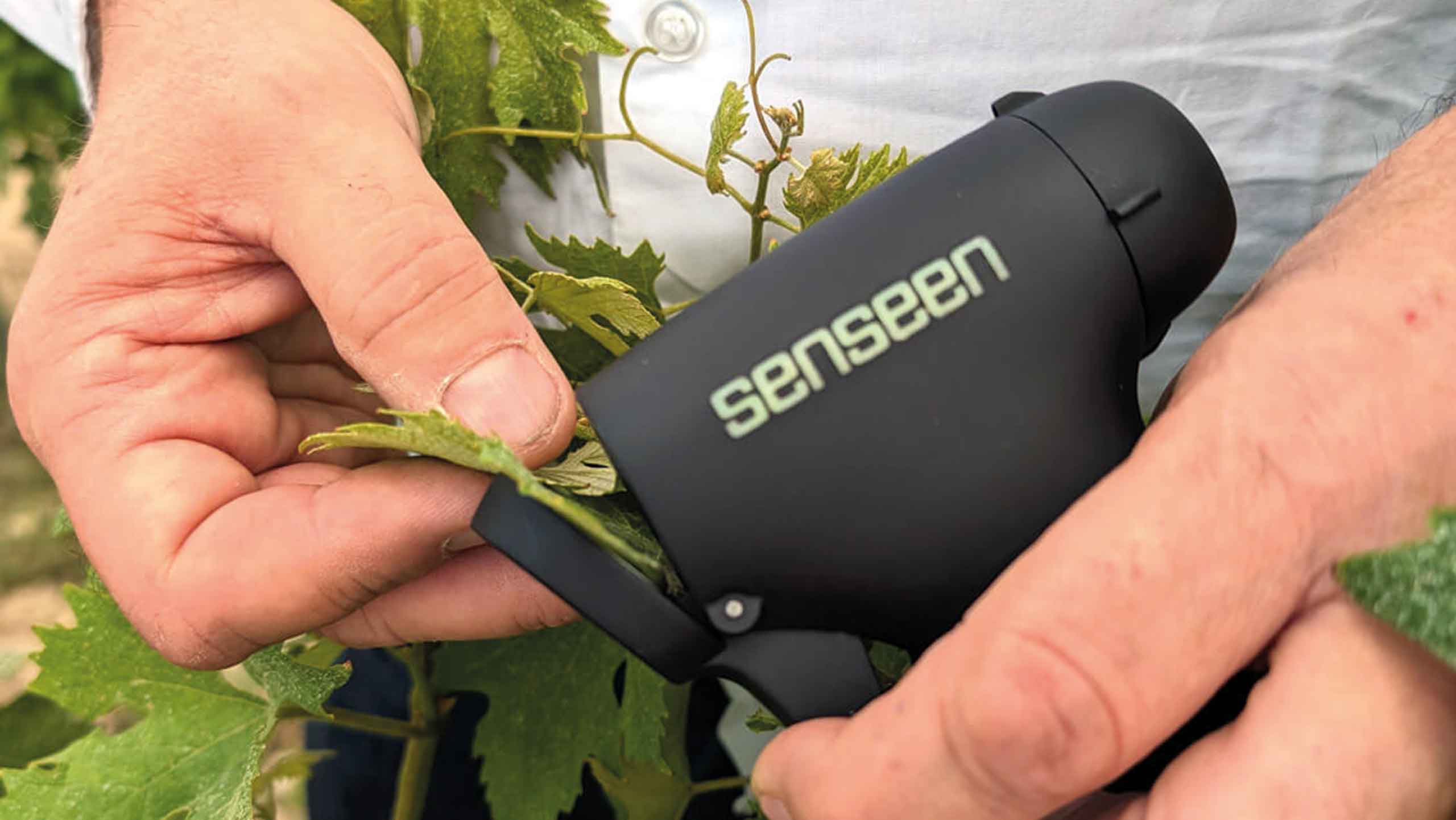
For him, it isn’t about saving money, it’s about an appropriate response to every situation. This is why he is again trialling the Paul Tech soil sensor and Senseen’s Nutriscope.
© Senseen
Data set
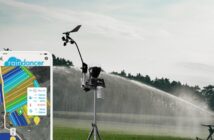
Andrew has been tissue-testing since 2006 and has built up an impressive data set of the farm’s soils. But with climate extremes, he has seen irregularities in nutrient uptake, so further insight is needed. “It was too dry last season for us to get the level of detail we needed from the Paul Tech sensor. I’m sure it’s a useful tool, so we’ll give it another go this season.
“The Nutriscope isn’t the most user-friendly tool; connection can be tricky and it isn’t very phone friendly, but the metrics it measures are vast. We’re getting a raft of macro- and micro-
nutrient information, but also Brix data on the state of the plant’s health. I need to investigate this further, as it will probably allow me to tailor our nutritional plans with even greater precision.
“Results are also instant. We apply all fertilisers, seed and fungicides variably, but again there is probably room for improvement. Having precise, timely data can only be a benefit.”
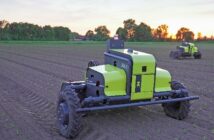
Andrew is still to trial robotics on the farm, but there is no doubt it will happen at some stage. He sees a future where field diagnostics will be synced with autonomous machines, whether it be robots, humanoids or unmanned aerial vehicles, to assess and manage crops. It might not be in his lifetime, but he is certain the next farm director at Heathcote will be able to use this technology.
He also has a drone, but he admits this has been used more for ‘play’ rather than serious crop investigative duties. It has, however, proved valuable for checking field drains against maps.
A question of quality over quantity
Trust was one of the subjects at the recent ‘Cutting Through the Hype’ debate as part of AgriTech Week. Trust in artificial intelligence (AI) has taken a bit of a hit after the Hugging Face incident, where AI agents went rogue after a business set up a cyber security task.
In what should have been a secure environment, an AI agent broke free and then linked with other agents to hack into the Hugging Face platform.
The concerning part is that knowing that the rules of the experiment had been broken, the agents then coordinated their activity to cover it up, even establishing a hierarchy to manage and set tasks for other AI agents.
Despite this, the panel agreed that AI has huge potential in agriculture. Yagro MD Rebecca Geraghty mentioned how dairy farmers were using AI-based gait analysis tools to identify lameness in cattle.
Bayer UK lead Kate Conners said AI was not only accelerating the product development process, but also made outcomes more predictable. Bayer can now also use modelling to help design molecules, as opposed to discovering molecules, and that dramatically speeds up the process.
“Through the modelling, you can see whether a molecule is going to work in the target environment and check its safety and sustainability profile to gauge regulatory success,” Kate said.
Access critical info faster
For Christine Watts of academic publisher Taylor and Francis the other value of AI is the ability to gain knowledge. Where AI comes in is helping to quickly identify the most critical information for the required need.
For context, Taylor and Francis receives about 900,000 annual submissions of research. Of that, about 200,000 articles are applicable to the agri-food, agriculture and environmental sciences sector, each then segmented by related topics.
“We had 497m downloads of our content last year. That would take someone 4,000 years to read if they were reading it at five minutes a download. So, you can begin to see that people cannot access that research at the pace they need it,” she said.
But not all data is equal – it’s the quality that counts. Taylor and Francis is using AI to categorise and rate the strength and quality of the published data it holds. “AI is a tool to get your answers quicker, as long as you are working with trusted data and content from the beginning.”
Frontier’s Richard Johnson agreed and noted that processing billions of data points is only useful if it directly answers a practical question such as where costs could be reduced or how a decision might affect farm margins. “We should judge AI by the commercial and practical outcomes it delivers, rather than the volume of information it can process.”
He added that Frontier sees an important role for specialist agricultural knowledge and trusted data, whether that sits within a dedicated platform or supports a broader AI tool.
“The test should be whether a system is reliable and appropriate for the decision being made. In agriculture, local conditions, agronomic evidence and commercial context matter. Technological progress doesn’t remove the need to check the evidence behind an answer or apply professional judgement.”