
Potato growers are being urged to prioritise store hygiene this summer after slow market movement left more ware crops in store for longer than planned.
Frontier’s Darren Wonnacott says the combination of increased tuber damage at harvest, extended storage and a market demanding only top-quality potatoes has created a “perfect storm” for storage disease pressure. “There was a lot of damage last harvest and with a long storage season, you end up with more issues because you’ve given the pathogens time to develop.”
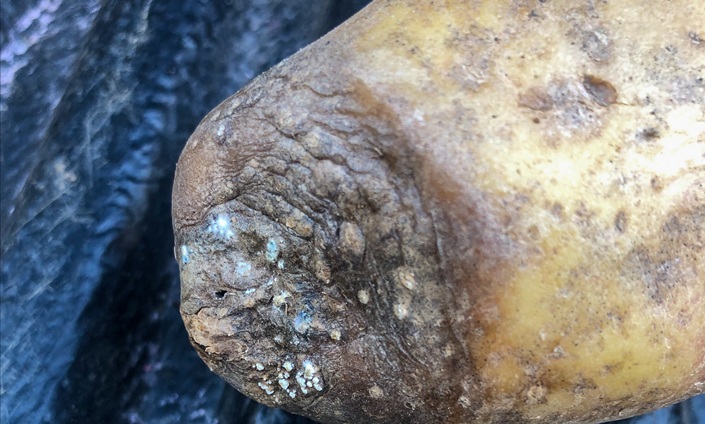
He reports seeing more fusarium dry rot and soft rots in stores this spring where tubers have been nicked or cut, along with increased silver scurf severity in some situations.
Disease bridge
The concern is not just the quality of crops still being marketed, but the risk that disease inoculum remains in stores providing a bridge to the 2026 crop.
“Because you’ve held those potatoes longer, and because there are potentially more problems with breakdown and higher disease levels, there could be a higher chance of spores sitting in your store ready to infect the 2026 crop,” says Darren.
The issue is most relevant to ware growers who have been forced to hold onto crop that would usually have been moved by now because of suppressed retailer and processor demand.
“If you’re out of your normal routine and if you’re seeing problems, it’s a good time to consider all your hygiene options to ensure there’s less risk of carry over,” he says.
While regular store disinfection is good practice, it’s not always practical and many potato producers will deep clean stores on a rotational basis. However, Darren says 2026 is a year for growers to carefully consider whether they can afford to miss a store treatment.
Store-by-store
He advises growers to assess risk on a store-by-store basis, considering how much crop damage occurred at harvest, how long crop was held and whether there were visible disease issues that have caused pack-out or grade-out problems.
Where risk is identified, physical cleaning is key before using wet fog disinfectant JET5 to reach the store fabric, roof space, plenums and ventilation system.
Soil, dust, old tubers and debris should be removed first but there is little value in disinfecting early if the store is then left open or used for other crops or machinery before potatoes return.
He has seen cases where JET5 has been applied only later for the doors to be left open, and the risk of dust coupled with disease spores blowing into the store.
He adds that stores can be treated soon after emptying, with no need for a long resting period before refilling.
Box treatment
Boxes can also be treated in store, although he advises loading only about half the store capacity because packing them in too tightly can restrict fog movement.
With potato production heading into what could be a challenging year, with increased costs and tough market conditions, Darren says taking a preventative approach is vital.
“We know 2026-27 is not going to be a bed of roses, so taking all the steps you can to reduce crop and financial loss is a sensible thing to do,” he concludes.