The first in a series of webinars and workshops took place last month, featuring, Northumberland mixed farmer Stuart Johnson, in what the AHDB called the ‘inspire’ stage of its Great Soils initiative.
A former Soil Farmer of the Year, Stuart’s soil health journey started 10 years ago, which he admitted was ‘financially driven’. Rising input costs with an intensive system made him question whether he could be more efficient and improve margins.
But there was also an increasing realisation that his soils were not as resilient and healthy as he had thought, something that became obvious when the dry season of 2018 struck. “Despite the progress we thought we had made, our sandy soils down by the river dried off spectacularly,” he said.
But Stuart is a realist and he admitted that what he is doing isn’t for everyone. He stressed that before starting out, clear goals and expectations need to be set. It is about what can be practically achieved and at what cost. And that has to include the type of soil and crops you are working with.
“Every farm has its own levels of sand, silt and clay, something that is inherited. You can’t realistically change the texture, but the structure is where gains can be made.”
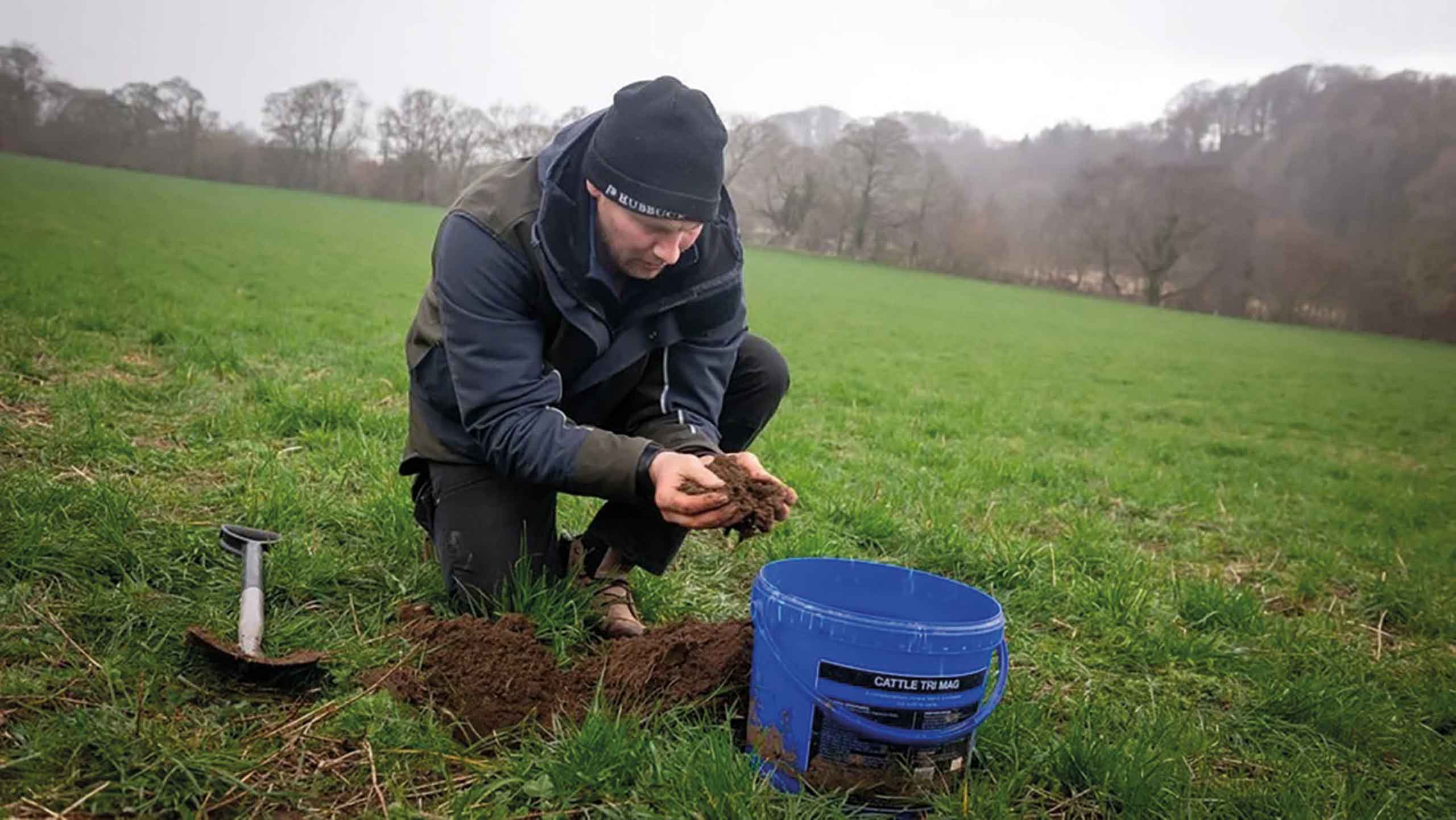
Stuart Johnson says constant monitoring is vital © Wharley Farm
Assess investment
There is also the cost-versus-benefit argument. A big investment in changing the soil structure at depth possibly isn’t going to pay if you just have ruminants on it and don’t manage them well. Equally, just small benefits for those growing high-value crops could deliver significant returns.But the business end of any farm is based on its ability to successfully grow plants, which Stuart pointed out has the benefit of many of the raw materials needed being freely available.
“The energy, water and nutrients a plant needs to grow are already in place. The question is how much is being captured, held and cycled,” he said. “As an industry, we’re paying for too much, even water. What growers need to ask is what the system can do for free.
“A 1% increase in soil organic matter can increase water-holding capacity by as much as 170,000 litres/ha in certain soil types. That is a significant amount of additional water potentially available to crops during dry periods. Going forward, we’ve all got to think about how we cope with the peaks and troughs of water flow with climate change.”
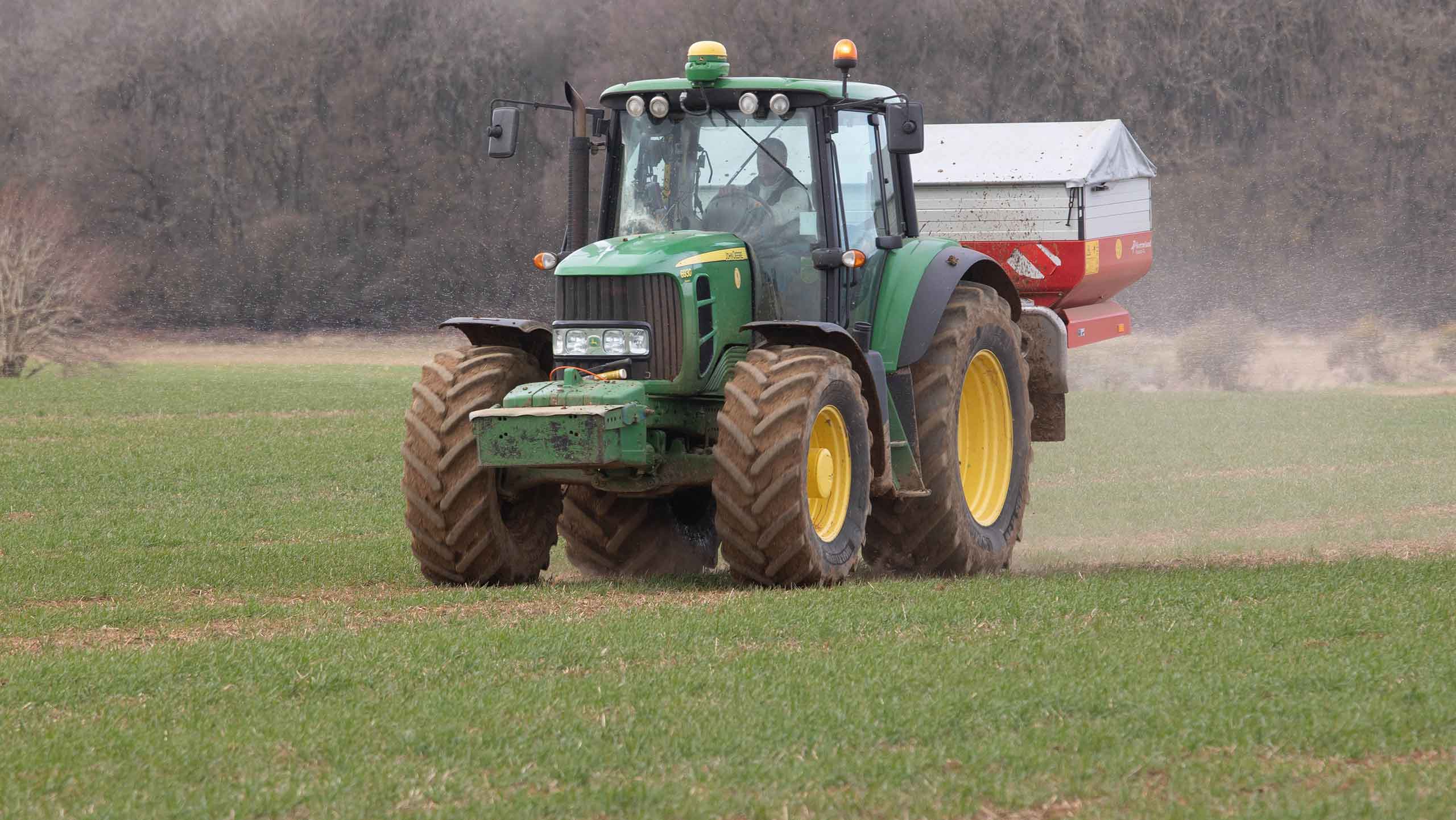
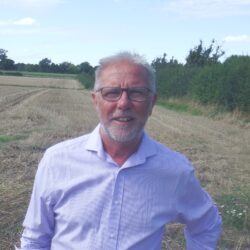
The need to reduce input costs started Stuart Johnson’s soil health journey © Tim Scrivener
Raw materials capture
The big difference between the farm now and back in 2018 is the capture of more of those raw materials. Stuart made the point that energy supply is a high cost for many businesses, but in the summer up to 16 hours of it can be beaming down in a single day. “Ecological economist NJ Hagen coined the phrase ‘energy is the currency of life’. How true that is. Leaves are plant solar panels; without them, all that energy is just going to waste.”
Stuart was again able to put some numbers to it. Showing a picture of soil being blown off a bare Suffolk field, he said it might look like a tiny fraction of the soil area and nothing to be alarmed about. But he cited research that calculated that just 0.15mm of soil being blown or washed away per hectare can be equivalent to 2t of nutrient-dense topsoil.
And it isn’t just soil. It has been estimated that it could contain 10kg of nitrogen, 6kg of phosphate and 4kg of potash. “Using illustrative nutrient concentrations and fertiliser prices, that represents about £25/ha in nutrient value. It doesn’t sound much, but that’s £2,500 across 100ha, and that’s before considering the loss of soil organic matter, structure and productive capacity.”
Stuart described himself as a ‘soil nerd’, but in truth he is more of an analyst. For someone who admits he likes crunching numbers, it all adds up. He has embraced the Understanding Ag 6-3-4 philosophy, based on the six principles of soil health, the three rules of adaptive stewardship and the four ecosystem processes.
Over time, the focus has also shifted from the short-term goal of improving financial resilience to his land. It is now about armouring the soil or, put another way, not turning off the carbon tap. That means having roots in the ground through cover crops and an arable rotation that includes herbal leys and reduced tillage.
Improvements in soil function and crop establishment are also contributing to greater resilience. Where poorly established winter cereals previously struggled through dry springs, better-established crops now have more leaf area to capture sunlight and intercept moisture from dew. Some of that moisture can also be absorbed directly through the leaves, providing an additional source of water during dry conditions.
Extended grazing
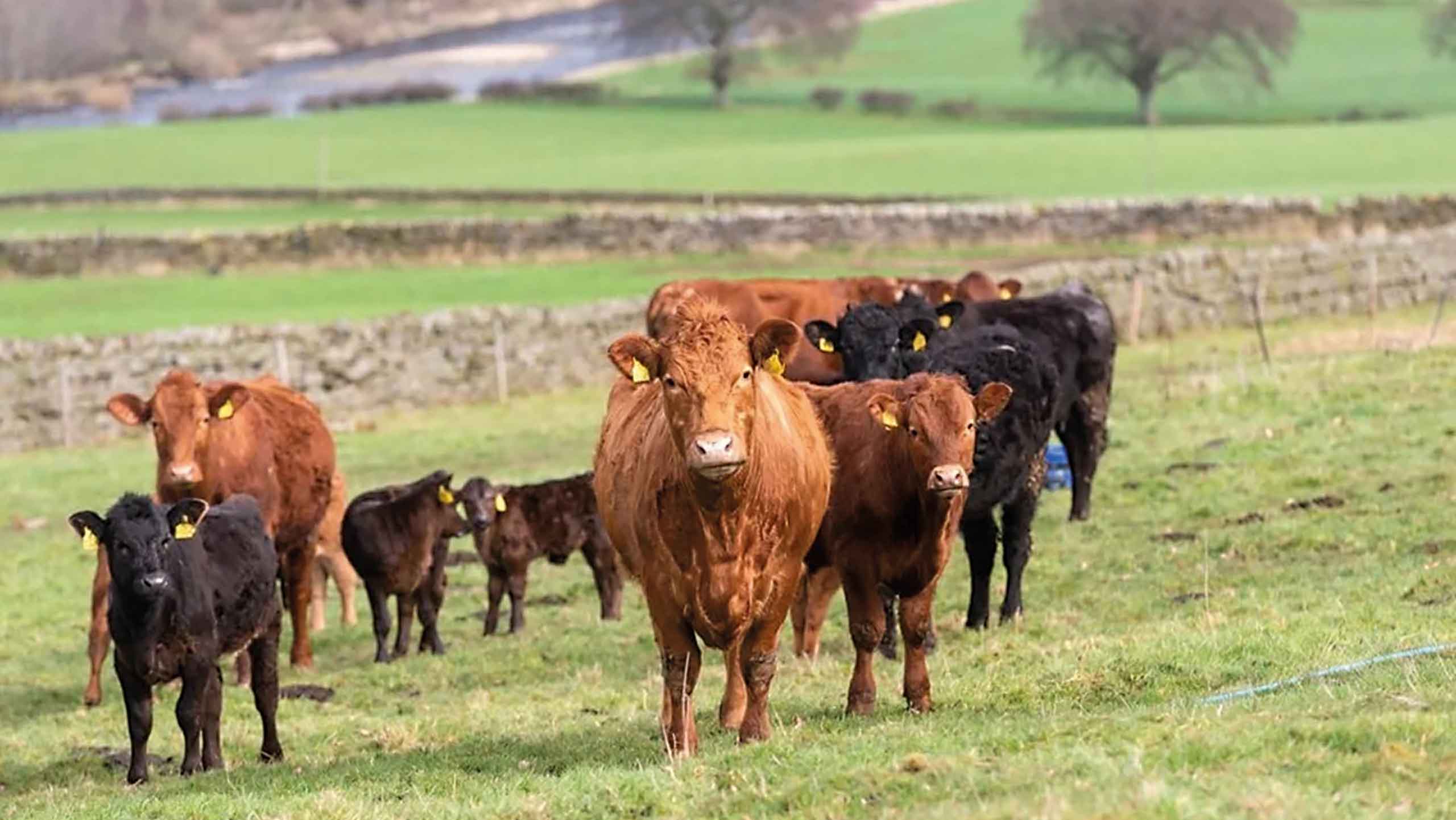
A big gain through the focus on soil function is a grazing extension. The cows are now out for longer.
Stuart showed a picture of his cows grazing on a December day. Changing the breed and system has allowed him to extend his grazing cycle.
“When indoors, it costs me £3.50/cow/day, while outside it is just £0.50. It makes a big difference to our bottom line. On those wet days when I might be moving the herd three times a day, it is time well spent. With feed, bedding and labour, the saving equates to £400-£600/day.”
He stressed that system management plays a huge part – both good and bad. The move to more rotational grazing played a big role in improving soil structure.
“Short grazing rotations can work well under suitable conditions, but repeatedly grazing plants before they have adequately recovered can restrict root development. Allowing plants sufficient recovery to rebuild their leaf area and carbon reserves supports greater root growth, which in turn helps develop soil structure and resilience at depth.”
Hard win
He admitted that building a healthier, better-structured soil at depth was harder, but said it was the foundation of soil function. “Everything is connected. The roots and biology help build structure, which then enhances nutrient and water flows.”
He acknowledged that different soils, climates and farming systems require different approaches. Understanding Ag’s 6-3-4 framework provides principles to guide management decisions rather than a prescribed system that every farmer must adopt.
“Mechanical intervention will be inevitable in some situations, but its long-term effects need to be considered. Without addressing the underlying causes, the benefits of mechanical intervention may be short-lived and soils can become compacted again.
“It is the biology that will sustain a healthier, better-structured soil. Changing the system that led to that lack of structure in the first place is the better solution.”
What is the 6-3-4 crop philosophy?
Developed over several years by Understanding Ag, 6-3-4 refers to the six principles of soil health, the three rules of adaptive stewardship and the four ecosystem processes. The company says this is a highly adaptive instead of a prescriptive approach.
Indeed, Understanding Ag says the moment someone tries to make the 6-3-4 philosophy prescriptive, they are no longer adaptive and regenerative.
Along with the principles of soil health – minimum disturbance, keeping the soil covered, living roots, diversity and livestock integration – Understanding Ag has added context.
It considers context the most important factor of all, and insists it must be defined before applying the other principles. This means setting realistic targets based on current and historical ecological parameters.
Three rules of adaptive stewardship
- Rule of compounding Every management decision or practice applied creates a series of compounding and cascading effects that are either positive or negative. Regular observation is needed to determine the compounding effects and whether adjustments are needed.
- Rule of integration Monoculture practices, whether in crop or pasture production, affect ecosystem diversity and encourage negative compounding and epigenetic effects.
- Rule of disruption Nature is extremely resilient and can recover from occasional disruption. The more diverse the system, the quicker recovery can occur
The 6-3-4 philosophy’s four ecosystem processes are based on capturing the free resources that nature provides. These are:
- Energy flow Use different plant architecture for optimum sunlight capture.
- Water and mineral cycle Soils need to be structured to capture nutrients and infiltrate water. Retention only happens when soil biology and microbiology are working effectively.
- Everything is connected. Everything functions better in a connected ecosystem.
For more information, go online.