
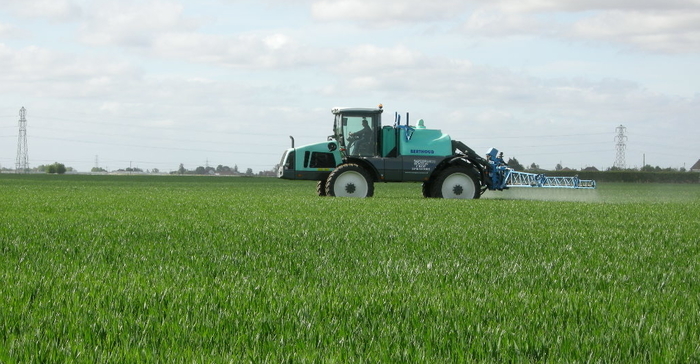
Use the T0 timing to keep a check on a range of diseases this season.
That’s the advice of Agrii’s Jodie Littleford, who cautions against just focusing on rusts and says that early intervention is key. “A T0 suppresses early inoculum from septoria, yellow rust and mildew, protects emerging yield-building leaves and initiates the stem-base programme,” she says. “In a season with many rust-susceptible varieties, interrupting rapid disease cycling early prevents it becoming more difficult and expensive to control later,” she notes.
Even in lower septoria years, she says consistent benefits have been seen from a T0. “Reducing septoria on emerging leaves lowers disease pressure in the upper canopy later in the season. It’s about protecting the whole programme.”
Agrii trials over several years show yield responses ranging from 0.15–1.1t/ha, equivalent to £24–£176/ha at £160/t, with an average uplift of 0.41t/ha. “In yellow rust situations specifically, the average benefit of a T0 over the past three years has been +0.65t/ha — worth around £104/ha at £160/t,” says Jodie.
Using a mixed triazole at T0 also frees up strobilurin applications for later in the programme, she suggests. “With reduced SDHI sensitivity in brown rust and the possibility of heightened rust pressure in a mild season, retaining flexibility later could be crucial.”
She also notes that including a biostimulant, such as Innocul8, may provide additional plant health benefits as part of a robust early-season strategy.
Ruth Stanley, commercial agro manager (UK & Ireland) for Sumitomo Chemical, notes Sakura, contains 167g/L of both bromuconazole and tebuconazole, offering complementary activity across a wide disease spectrum, including stem-based diseases at T0. “Bromuconazole helps reduce reliance on other actives such as prothioconazole, while tebuconazole provides rapid knockdown. Together, they deliver both activity and persistence,” she adds.