
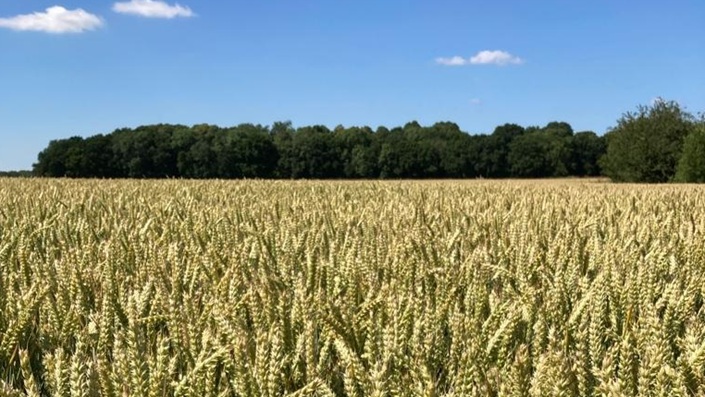
Winter wheat Arlington has achieved full Group 1 status, the company suggesting it offers growers a new high-performing option for the milling market for the coming season.
DSV UK wheat breeder Dr Matt Kerton says Arlington has completed all commercial assessments and is officially confirmed as a UKFM Group 1 milling wheat. “Arlington is a variety that perfectly balances strong yield, top-tier baking performance and excellent agronomic traits, and has the second highest untreated yield on the entire Recommended List,” he says.
UK Flour Millers head of technical and regulatory affairs, Joe Brennan, adds: “Flour milling sector demand for wheat is strong and consistent season to season. “We hope new Group 1 varieties such as Arlington establish themselves and provide millers a consistent source of high-quality homegrown wheat.”
Matt notes that Arlington has the protein, gluten strength, water absorption and bake performance required of a true Group 1 wheat, while also offering agronomic resilience. “Arlington has been bred to combine end-use quality with robust field performance. Arlington delivers a UK treated yield of 99% of controls, just 1% behind the current Group 1 benchmark in AHDB data.
“It is also the highest-yielding Group 1 in the East region and the highest-yielding second wheat in the category,” he adds.
Arlington has a milling specification protein content of 12.5%, Hagberg Falling Number of 309s and specific weight of 78.9kg/hl. UK millers have also highlighted its strong gluten quality, high water absorption, excellent bake performance and good loaf volume.
Matt describes the variety as agronomically very similar to Skyfall but it brings stronger untreated performance and a valuable disease package. It is rated at 7.0 for both septoria and yellow rust, carries the PCH1 eyespot resistance gene and offers resistance to orange wheat blossom midge (OWBM).
“It also has a low vernalisation requirement, giving growers flexibility around later drilling, while its short, stiff straw helps reduce lodging risk and protect yield through to harvest,” he adds.