
Maize growers are urged to ensure their soil temperatures are right during the early part of the drilling window and must be prepared to adapt to field conditions.
Becci Shrimpton of Grainseed is advising maize growers that exceptionally warm conditions in March and early April provided an unusual opportunity to get ahead with maize establishment, but warns that a dip in soil temperature must not be ignored.
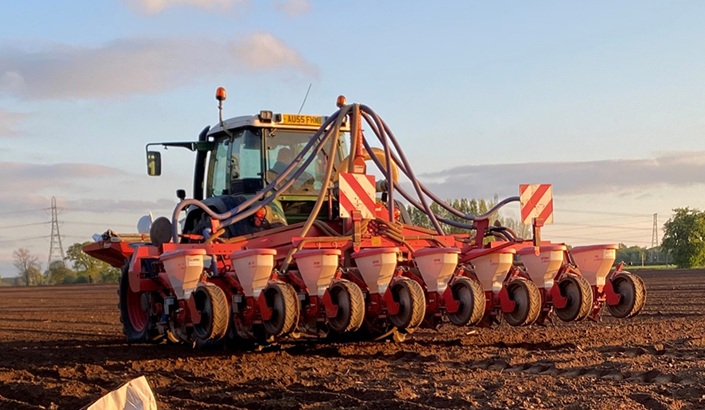
Drilling between 20 April and 20 May is normal practice for most farmers, and any opportunity to move during this time is advised, but only if the soil and weather conditions are right. “Soil temperature is the key factor when deciding the right time to drill,” she explains.
She says the soil needs to be at 10°C at 10cm for at least four days, when tested at breakfast time, the coldest part of the day. “As daylight hours increase and the ground starts to dry out, most livestock farms have already turned cattle out to graze and are utilising the abundant grass growth.
“This allows for the clearing of sheds and slurry lagoons, providing essential nutrients to the soil ahead of maize drilling.”
Becci also stresses the importance of soil structure and reducing cultivations to save on diesel.
“Growers with good soil structure, especially those who used winter cover crops, shouldn’t bury that hard work with a plough. A tined cultivator will improve soil aeration and consolidation, leading to an ideal seedbed for maize.”
Devon grower Graeme Cock, a member of the Maize Growers Association, has been using tined cultivators for 15 years.
“Switching from power harrows to a Horsch Simba tined cultivator has reduced soil erosion and saved fuel,” he explains.
“I prefer drilling under SAMCO film in early April for an early harvest, but if it’s a wet spring, I’ll opt for an ultra-early maturing variety and conventional drilling at the end of April.”
Limagrain’s Tim Richmond agrees and says the best way to test soils are sufficiently dry is to pick up a clod and press it between the fingers. “If the soil crumbles, without sticking, then it will be possible to create the firm, fine seedbed essential for good soil-to-seed contact. If soils are left too loose, the risk of bird damage is increased.”
He also points to the continuing progress being made by maize breeders in order to emphasise the opportunities that the crop offers, whether grown for forage or grain.
“Earlier maturity has been a game changer for maize growers in recent years, allowing more successful autumn drillings to follow maize, whilst advances like improved cell wall digestibility and stay-green qualities are adding to the feed value of forage crops,” he says. “During the dry summer of 2025 we witnessed the advantages of increased drought tolerance, with the new high yielding variety LG Highlight, for example, excelling despite such a challenging season.”