

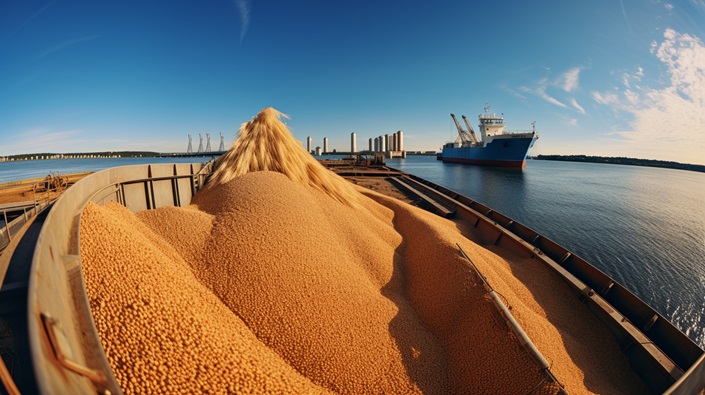
Further strikes on infrastructure and shipping in the Black Sea have helped push grain prices higher. Nov-26 UK feed wheat futures have bounced back above the £200.00/t mark.
Turkey has called on Ukraine and Russia to establish a mechanism for a moratorium on mutual strikes against vessels in the Black Sea. It came after a Turkish-flagged cargo ship was hit.
According to the AHDB, expectations of good crops in both Russia and Ukraine have stopped prices from going higher. Yesterday, AKP-Inform increased its estimate of the Ukrainian 2026 wheat crop by 0.2 Mt to 22.6 Mt and barley crop by 0.9 Mt to 6.3 Mt, but the company cut its export forecasts by 1.8 Mt for wheat and 0.8 Mt for barley due to the challenges of shipping from Black Sea ports.
The weather continues to influence markets too. Expana cuts its forecast of the 2026 EU-27 maize crop by 4.6 Mt from last month to 49.1 Mt, now down 14% year-on-year. Argus Media forecast the crop 20% below last year at 48.0 Mt.
Traders are also awaiting confirmation of US maize crop conditions ratings after periods of hot weather. A poll by Reuters shows a wide range of expectations for maize yields, with the average expectation 0.3% below the USDA’s July forecast.
Oilseeds outlook
Disruption to rapeseed and sunflower oil exports has also supported rapeseed prices. Paris Nov 26 oilseed futures have risen to €537.00/t.
There has also been disruption to trade within Europe. The dry weather has reduced river levels, impacting shipping, particularly key waterways like the Rhine and Danube.
The possibility of a deal between the US and Iran pushed Brent Crude lower last week, limiting gains for the oilseeds complex.
However, the talks appeared to have stalled and crude oil prices have rebounded as a result. Iran is claiming compensation before it will open the Strait of Hormuz. US President Donald Trump countered with a demand for compensation over US military personnel deaths and deployed further US naval assets to the region.