

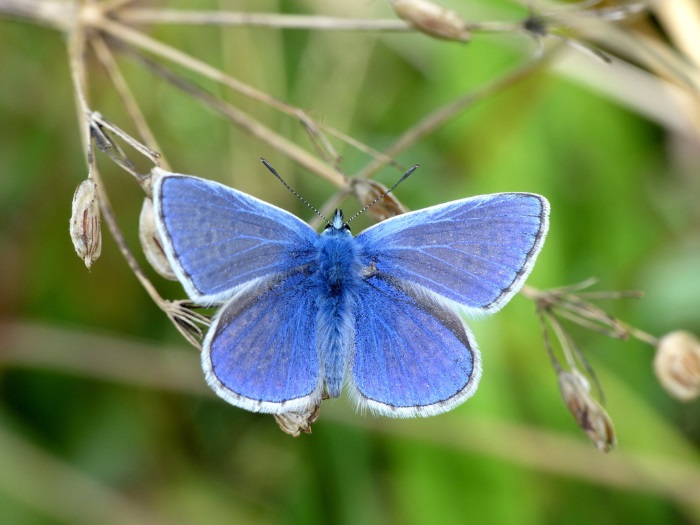
A study has found that agri-environment schemes support butterflies throughout their life cycle.
The study by researchers from the UK Centre for Ecology and Hydrology (UKCEH), Butterfly Conservation and the British Trust for Ornithology (BTO), found that environmental measures on farms do more than provide nectar-rich flowers for adult butterflies. They also help create the variety of plants and habitats needed by caterpillars, supporting butterflies from larva to adult.
Using information collected across large areas of farmed countryside in six regions of England, researchers looked at butterflies, flowering plants and habitats to understand how different features of agri-environment schemes influence wildlife.
The study found that areas under agri-environment management tended to support a greater variety of plants and more flowers alongside more butterflies and a wider range of butterfly species. The new analysis helped researchers show the positive effects of agri-environment schemes on butterflies link partly to the greater variety of plants, which they connected to food for caterpillars
UKCEH senior ecologist, lead scientist and co-author, Dr Joanna Staley, said: “We’ve known for some time that agri-environment schemes can benefit butterflies, but this research helps explain why. Our findings show that these schemes can provide the food and habitats butterflies need throughout different stages of their life cycle. That gives us greater confidence that nature-friendly farming can make a real contribution to wildlife recovery.”
The researchers say the findings are encouraging because they show how actions already being taken by many farmers can contribute to wider efforts to reverse biodiversity declines and support wildlife while helping create productive, resilient farming landscapes.
A resurvey of the same sites is now underway to collect data to measure butterfly population change since this baseline survey. This will allow the researchers to confirm whether these positive effects on adult butterfly abundance are also supporting butterfly populations over longer timescales. This will conclude in 2029.