
Farmers should consider using the suite of decision support tools now available to precisely manage OSR nitrogen rates, says Agrii’s digital agronomy development manager Lucy Cottingham. Drone assessments, soil sampling and satellite imagery can all help improve the accuracy of nitrogen recommendations.
Thick and lush OSR crops can often flatter to deceive, which is why farmers should take steps to ensure the canopy has the right architecture and is free of disease to make the most of their potential.
“Early in the season, you want to determine the variations in biomass to potentially reduce nitrogen applications in the thicker areas and increase rates in thinner parts of the crop,” explains Lucy.
NDVI satellite imagery on digital farming platforms like Contour provides an easily accessible overview of biomass variation across a field, she says. This is further enhanced by the ability to provide variable-rate nitrogen recommendations from Contour.
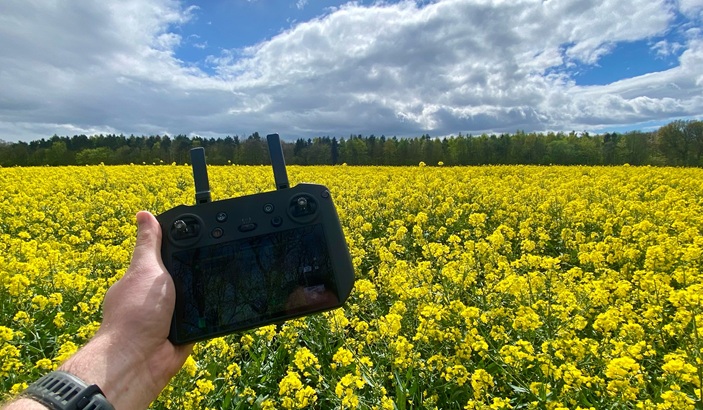
“Satellite imagery can be complemented by using drone assessment tools like Skippy Scout. This uses A.I. flight software to measure green area index across a field, recording variations in crop biomass at a much higher resolution than NDVI images from a satellite.”
“Crops are well forward. They have benefited from a lack of pigeon grazing, says adds Agrii agronomist Robin Nurse. “When things start moving, it is likely to happen in a rush this year. We have superbly well-rooted crops. The minute they are ready, they will take up nutrients and go, so growers will need to be conscious of this.”
Nitrogen is amongst the main nutritional levers for canopy manipulation, he adds. The aim is for a green area index of 3.5 at flowering. Micronutrients, especially magnesium, boron & molybdenum, are particularly important in early spring when the crop is growing rapidly.
“Setting this to a calendar date is always tricky. Considering the crop’s rooting and advanced growth stage, it could all happen very quickly this season,” he concludes.