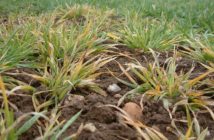


With recent rains enabling autumn drilling to kick off in earnest, arable growers are being reminded that, despite the summer’s dry conditions, slugs could still decimate emerging crops.
“Given how hot and dry conditions were throughout the summer, there’s an assumption that the threat posed by slugs could be reduced this autumn,” explains Adama’s David Griffiths. “Unfortunately, that’s not strictly true, as although slugs need moisture to remain active, they are exceptionally well adapted to surviving adverse conditions.
David urges growers to regularly monitor for the presence of slug activity and to be prepared to protect vulnerable young crops as soon as slugs have been observed. “Regular slug counts, along with a close interrogation of the weather forecast, should therefore be a priority, with pellet spreaders calibrated and ready to be deployed as soon as slugs have been seen and a period of favourable, settled weather prevails.”
David says that pellet size and consistency are vital to application accuracy: “As well as ensuring spreading equipment is properly set up and operated at a sensible forward operating speed of around 12kph, it is important to select pellets of an appropriate size, weight and shape, all of which have a significant effect on spreading ballistics and therefore on how accurately the pellets will be applied.”
Only the highest quality pellets will achieve consistent and accurate spread patterns, David continues. “For example, pellets such as Gusto Iron and our new mollusicide, Ferrabait are manufactured to strict tolerances to ensure they match their 2.5mm by 2.0mm size specification. This ensures a consistent spread pattern and an optimal number of baiting points of 40-50 pellets per m2 when applied at typical field rates.”