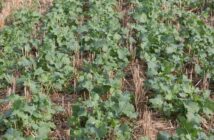

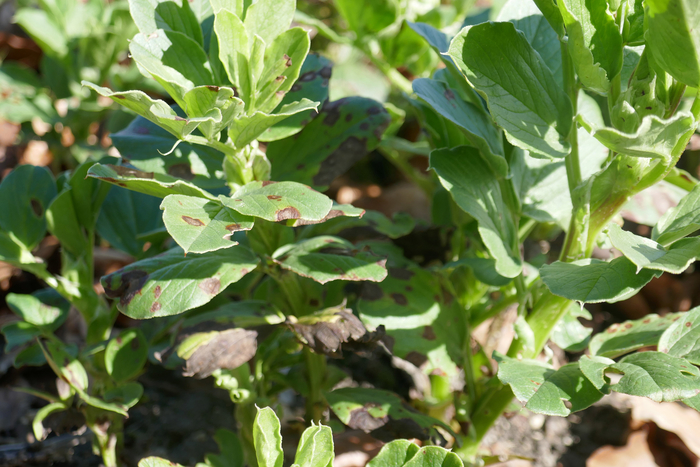
Following prolonged wet weather, field bean crops are at risk of chocolate spot.
Latest reports from the PGRO have highlighted the high incidence of chocolate spot (Botrytis fabae) and the ongoing need for urgent action. Early applications of fungicide may be needed to prevent further development, it advises.
The PGRO warns that the effects of failing to control early chocolate spot infections can be devastating. It advises growers and agronomists to check crops as a priority, especially on the underside of leaves, where leaf spots may be more prevalent.
“Every rain event risks further spreading spores onto new growth,” warns Syngenta field technical manager, Simon Jackson.
He advocates protecting emerging new leaves at the earliest opportunity. Field trials and growers’ experience have shown azoxystrobin (Amistar) can keep leaves green and clean of infection, until weather conditions dry up and the main fungicide programme kicks in.
“It provides good protection of clean leaves, but for added curative activity in high pressure situations, on infected crops in continuous wet weather, tank-mixing a product with some curative activity, such as metconazole, would further increase results,” he suggests.
He cautions against using an SDHI at this stage, saving it for later in the programme in line with resistance management advice.
One of the challenges with wet soils is finding a spray opportunity and a period where crops are not under stress for application, highlights Simon. Growers should also be alert for potential risk of frost damage exacerbating any spray effects, ideally applying before any frost forecast, or leaving at least five days after a frost event for plants to recover.
“The impacts of early chocolate spot under such high-pressure conditions can be severe,” he says. “The current aim is to protect new growth, so that by the time the crop gets to GS51 there’s strong clean growth and good yield opportunity.”